
By Rabbi Yair Hoffman for the Sfas Tamim Foundation
Join our WhatsApp groupSubscribe to our Daily Roundup Email
For twenty years, the residents of Far Rockaway had lived with a maddening injustice born of nineteenth-century railroad engineering: the train tracks to Manhattan passed through Nassau County.
It didn’t matter that Far Rockaway sat squarely within the five boroughs. It didn’t matter that its residents paid New York City taxes, voted in New York City elections, sent their children to New York City schools. When they stepped onto the LIRR platform each morning, the fare system treated them as Long Islanders. While a resident of Jamaica could purchase a CityTicket for $7 peak, the Far Rockaway commuter paid $13.00. Nearly double. For a trip that began and ended within the same city.
And then came August 20th, 2023.
The MTA unveiled something unprecedented—a first in the 189-year history of American commuter rail: “The first ticket ever created for users of a specific station.”
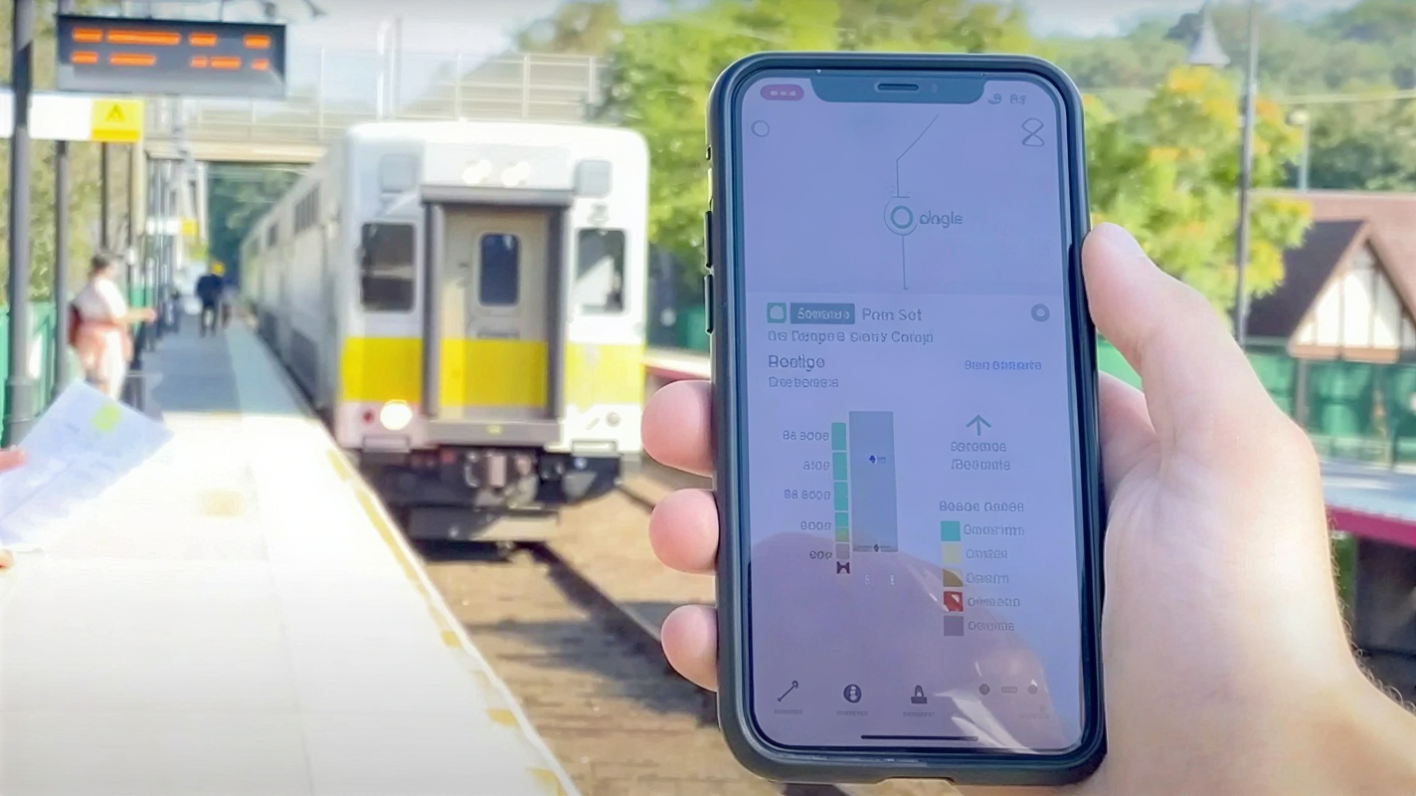
The Far Rockaway Ticket would mirror CityTicket pricing exactly: $7.00 peak, $5.00 off-peak. But to prevent abuse, the MTA deployed twenty-first-century technology. The ticket would only be sold at Far Rockaway station, and the TrainTime app would verify—via GPS—that purchasers were physically present there. If your coordinates placed you in Lawrence or Cedarhurst, the discount simply wouldn’t appear.
For Far Rockaway, it was liberation day.
But Just Down the Tracks…
The Far Rockaway Branch doesn’t terminate at Far Rockaway. The tracks continue through Lawrence, Cedarhurst, Woodmere—the Five Towns, home to one of the largest Orthodox Jewish communities in North America.
These communities share shuls with Far Rockaway. Their children attend yeshivos together. The county line separating them is invisible—no fence, no checkpoint. A Lawrence resident can walk to Far Rockaway in twenty minutes.
But on August 20th, 2023, that invisible line became a six-dollar chasm. Far Rockaway to Penn Station: $7.00. Lawrence to Penn Station—same train, same car, same destination: $13.00.
The MTA had solved one problem and created another. And so began a new chapter involving morning shiurim and evening minyanim, GPS coordinates and halachic categories, the letter of the law and the spirit of fairness.
The cry went out. “Kol Dimes Achicha tzoakim aylai! The injustice of it all!”
The invention of the Far Rockaway Ticket unleashed one of the most fascinating she’eilos in modern Torah jurisprudence.
A Halachic Analysis: May Reuven Get Off at Lawrence?
Reuven, a Lawrence resident, attends a morning Daf Yomi shiur in Far Rockaway. He legitimately purchases a Far Rockaway Ticket at the Far Rockaway station for $7 (peak) to travel to Penn Station. The question arises on his return trip: May he exit at Lawrence—his actual home—rather than riding to Far Rockaway and walking back?
The Core Halachic Issues
This she’eilah touches upon several fundamental prohibitions discussed extensively in the sources:
- Is This Geneivah (Theft)?
At first glance, one might argue there is no theft here. Reuven paid for travel to Far Rockaway—a longer distance than Lawrence. He is using less than what he purchased. The MTA loses nothing; indeed, Reuven frees up a seat for the remaining stops.
However, the analysis runs deeper. As the Chofetz Chaim rules in his Ahavas Chessed, and as explained regarding the verse “Midvar Sheker Tirchak” (Shemos 23:7), when a lie is used to elicit money unfairly—or in this case, to avoid paying money that is legitimately owed—it constitutes full-fledged theft. The Far Rockaway Ticket exists solely to provide fare equity for Far Rockaway residents. The entire justification for the discounted fare—that Far Rockaway is within New York City and its residents deserve CityTicket pricing—does not apply to Lawrence, which sits in Nassau County.
When Reuven uses this ticket to travel to Lawrence, he obtains a benefit—a $6 discount—under false pretenses. A Lawrence-to-Penn-Station ticket costs $13.00 peak. By exiting at Lawrence with a $7 Far Rockaway Ticket, Reuven has effectively obtained a Lawrence fare at a Far Rockaway price.
- Is This Gneivas Da’as (Deception)?
The prohibition of Gneivas Da’as is discussed at length in the sources. The Gemara in Chullin (94a) cites Shmuel as stating that this prohibition applies universally—to Jews and non-Jews alike. As the Shaarei Teshuva (3:181) teaches, even the normally available leniency of “Mutar L’shanos Mipnei HaShalom”—that one may sometimes deviate from truth to maintain peace—does not apply to Gneivas Da’as.
The Far Rockaway Ticket was created, as MTA Chair Janno Lieber stated, specifically “for Far Rockaway riders.” The GPS verification system was engineered precisely to ensure that only those physically present in Far Rockaway could purchase this ticket. When Reuven uses this ticket to travel to Lawrence, he is deceiving the MTA about the fundamental nature of his trip. He is not a Far Rockaway resident. His destination is not Far Rockaway. He is exploiting a technicality.
According to the Sefer Yereim and the Ritvah, Gneivas Da’as is a de’oraisa (biblical) prohibition. According to the SMaK, it is de’rabanan (rabbinical). But all authorities agree it is a full-fledged prohibition.
- Does Dina D’Malchusa Dina Apply?
The principle of Dina D’Malchusa Dina—the law of the land is the law—is codified in Choshen Mishpat 369:8. The MTA’s fare structure is established law. The Far Rockaway Ticket is explicitly designated for “travel between Far Rockaway and Zone 1 stations.”
One might argue that since Reuven boards in Zone 1 and exits before Far Rockaway, he has not technically violated any MTA rule—he has merely traveled a shorter distance than his ticket permits. However, this argument fails upon closer examination. The ticket’s purpose and the MTA’s clear intent is to provide discounted fares specifically for Far Rockaway residents traveling to and from Far Rockaway. Using this ticket to reach Lawrence circumvents the entire fare structure the MTA has established.
- The Sefer Chassidim’s Limitation
The Sefer Chassidim (#426), cited by the Eliyahu Rabbah (Siman 166), writes that the leniency of lying for peace applies only to past events—not to current or future events. When Reuven purchases his morning ticket in Far Rockaway, he already knows he intends to exit at Lawrence on his return trip. This is a planned, future deception—precisely the category the Sefer Chassidim excludes from the leniency.
- The Prohibition of Lying in Writing and Action
Rav Meir Dan Plotzki zt”l, the author of the Kli Chemda, writes emphatically that the prohibition of lying applies equally to written falsehood. The Rishonim and Acharonim (Tosfos, Yad Ramah, Chedvas Yaakov, Bais Efraim) all concur that lying in writing is forbidden—and because it involves an actual “action,” many Poskim rule it is worse than lying merely with the mouth.
Furthermore, Rav Yavrov zt”l in his Niv Sfasayim (1:6), based on the Sefer Chassidim (1:46), rules that even alluding to a lie through physical action is forbidden. This is derived not from “Midvar Sheker Tirchak” but from the separate prohibition of “Hin Tzedek” (Vayikra 19:36)—that our “yes” must be truthful. When Reuven boards the train with his Far Rockaway Ticket and then exits at Lawrence, his action itself constitutes a form of deception.
The Human Element: Shalom Bayis and Chinuch HaBanim
One might argue that the stringent view imposes an unreasonable burden. Reuven would arrive home 25-30 minutes later. His children would miss his presence at dinner. His wife would shoulder the burden of homework and bedtime alone. Must Reuven trudge through winter weather, braving cold and snow, to satisfy what might be characterized as a mere chumra?
The sources do give weight to Shalom Bayis. The Gemara in Yevamos (65b) establishes that one may deviate from truth to maintain peace. Rav Nosson even rules it is a Mitzvah to do so, and the Rif and Rosh rule accordingly.
However, as the Shaarei Teshuva (3:181) makes absolutely clear: the leniency of Mutar L’shanos Mipnei HaShalom does not apply to Gneivas Da’as. Deception involving financial benefit stands in a category of its own. The human cost, however real, cannot override a clear prohibition.
Moreover, as the Mesilas Yesharim (Chapter 11) explains regarding the concept of Poel Tzedek, what might appear to be excessive piety in financial matters is actually required conduct. One may not rationalize deception by pointing to personal hardship.
The Initial Conclusion
Based on the sources, the answer appears to be that Reuven may not get off at Lawrence.
The Far Rockaway Ticket represents a specific benefit created for Far Rockaway residents. Using it to travel to Lawrence—regardless of the fact that Lawrence is before Far Rockaway on the train route—constitutes:
- Gneivas Da’as – deceiving the MTA about the nature and purpose of his trip
- A form of Geneivah – obtaining a $6 discount to which he is not entitled
- A violation of Dina D’Malchusa Dina – circumventing the established fare structure
The fact that Reuven purchased the ticket legitimately in Far Rockaway does not permit him to use it for an illegitimate purpose. The GPS verification confirms where you are when you purchase—but the ticket’s validity depends on where you’re going.
The Practical Resolution
What should Reuven do if this true?
He has several options:
- Purchase a regular Lawrence ticket ($13.00 peak) for his return trip. Yes, this costs more. But as the Chofetz Chaim writes in Sfas Tamim (Chapter 3), one who lies ends up losing his kosher money as well. The short-term savings are not worth the spiritual cost.
- Ride to Far Rockaway and walk home. If the weather is reasonable and the distance manageable, this fulfills his ticket’s terms honestly.
- Reconsider his morning routine. Perhaps there is a Daf Yomi shiur closer to home, or one that meets at a time that doesn’t require the LIRR commute.
- Ask a competent Posek. This analysis presents the relevant sources, but every individual’s circumstances differ. A personal she’eilah to one’s Rav is always appropriate for matters of this complexity.
A Final Thought
The Sefer Chassidim (new edition, Siman 1195) teaches that one who speaks only truth—who wishes not even to think falsehood—finds that his words become reality. As it says in Iyov (22:28): “You will decree a thing, and it will be established for you.”
The residents of Kushta, the Gemara in Sanhedrin (97a) tells us, devoted themselves to speaking only truth. They never died before their time.
The $6 daily savings—$3,000 annually—may seem significant. But the spiritual cost of daily deception is incalculable.
Reuven stands on the platform at Penn Station. The Far Rockaway train is boarding. The halacha, it would seem, requires him to ride all the way to the end of the line.
Ve’chai bahem—and he shall live by them. Sometimes living by the Torah means a longer walk home in the cold. But as the Ohr Yitzchok of Rabbi Yitzchok of Radvil teaches, there is a special scale of reward for every Mitzvah performed without even an iota of sheker.
The walk from Far Rockaway to Lawrence, in the dark, in the cold, may be precisely the path to that reward.
The Counter-Argument
On the other hand several counter-arguments could be made:
A Halachic Analysis: The Case for Permitting Reuven to Exit at Lawrence
Reconsidering the She’eilah
Upon deeper examination of the sources, a compelling case can be made that Reuven may indeed exit at Lawrence. The initial analysis, while thorough, may have overlooked several crucial distinctions that point toward leniency.
The Core Arguments for Leniency
- Reuven Paid for MORE Than He Is Using
This point cannot be overstated. Unlike cases of classic Geneivah or Gneivas Da’as discussed in the sources, Reuven is not taking something to which he is not entitled. He is declining to use the full value of what he purchased.
The Far Rockaway Ticket covers travel from Penn Station to Far Rockaway. Lawrence is before Far Rockaway. Reuven paid $7 for a journey of X miles. He is traveling X-minus-Y miles. The MTA has gained, not lost. They sold a longer trip and provided a shorter one.
This is fundamentally different from the cases in Bava Metzia (59b) where one mixes older produce with newer produce, or the cases in Bava Metzia (60b) where sellers make animals appear newer through artificial means. In those cases, the buyer receives less than what he paid for. Here, Reuven receives less distance than what he paid for—but from the MTA’s perspective, they have been overpaid, not underpaid.
- The Rashi-Tosfos Distinction in “Mateh Es Atzmo”
The sources discuss the concept of “Mateh es Atzmo Mutar” from the Gemara in Chullin (94b). This is a critical distinction.
Rashi holds that the prohibition of Gneivas Da’as regarding non-monetary matters applies only if someone actively says something deceptive. If no deceptive words are spoken, there is no Gneivas Da’as—because the other party is considered to be “deceiving himself.”
Tosfos takes a stricter view—that one transgresses Gneivas Da’as even without speaking if one intends to deceive. However, even Tosfos agrees there is no obligation to correct a misinterpretation that the other party made of their own volition.
Consider Reuven’s situation: He boards the train at Penn Station. He shows his valid Far Rockaway Ticket to the conductor. He says nothing false. He simply exits at Lawrence when the train stops there.
Has the MTA “deceived itself”? The MTA created a system where:
- Anyone physically present in Far Rockaway can purchase a Far Rockaway Ticket
- The ticket is valid for travel between Far Rockaway and Zone 1 stations
- Lawrence is an intermediate stop on that route
- There is no rule requiring passengers to ride to their ticket’s final destination
If the MTA wanted to restrict ticket usage to Far Rockaway residents, they could have required proof of residency. They chose GPS verification of location instead. This was their system design choice. According to Rashi’s view, when Reuven silently exits at Lawrence, the MTA’s assumptions about his destination are their own—he has said nothing false.
- Minhag HaSochrim—The Custom of the Marketplace
The sources emphasize repeatedly that the parameters of Gneivas Da’as are determined by “Minhag HaSochrim”—the prevailing business customs.
The Smah in Choshen Mishpat (228:16) on Shulchan Aruch (228:6) states that when everyone (or most people) knows that white color is added to meat to make it appear fatter, it is permitted—because that is the minhag hasochrim, what all the sellers do.
What is the minhag on public transportation? It is universally understood and accepted that passengers may exit at any stop along their route, including stops before their ticket’s stated destination. No train system in the world requires passengers to ride to the final destination printed on their ticket.
If a person purchases a ticket from Penn Station to Montauk (the end of the LIRR line) and exits at Babylon, has he committed Gneivas Da’as? Of course not. He simply chose not to use the full value of his ticket. The same principle should apply here.
- The Rashba and Rosh: No Gneivas Da’as in a “Matanah”
The sources cite a significant dispute between the Rishonim. The Rashba in Chullin (94a) and the Rosh (Perek 18) hold that if something involves a “matanah”—a gift or benefit flowing to another—there is no prohibition of Gneivas Da’as.
Tosfos (Chullin 94b) and the Ritvah (Chullin 94b) disagree. However, even those who disagree acknowledge that when the deceiver is giving something to the other party, this “makes up a bit for the deception.”
In our case, Reuven is effectively giving something to the MTA. He paid for a longer trip and is taking a shorter one. He is surrendering value, not extracting it. According to the Rashba and Rosh, this should remove the case entirely from the category of Gneivas Da’as.
- The Meiri’s Principle Regarding an Overextending Host
The Titein Emes L’Yaakov (Siman 120), brings the Meiri’s interpretation of the Gemara about lying regarding a host’s hospitality. The Meiri explains that if one is concerned that a host is extending himself too much to feed a guest, the guest may lie and say he has already eaten—even if he has not.
The underlying principle is powerful: When one party is giving more than is necessary or appropriate, the recipient may decline to accept the full amount without being obligated to explain why.
Reuven paid the MTA more than the cost of his actual trip. He has “overpaid” for his journey. Just as one may decline a host’s excessive hospitality without full disclosure, Reuven may decline to use the full distance of his ticket without explanation.
- The “Negotiating Tactics” Precedent from Midrash Tehillim
The sources cite a remarkable passage from Midrash Tehillim (Mizmor 12) where Rabbi Yochanan advised Rabbi Chiya of Tziporei: “When you go to purchase wheat, say that it is barley you wish to buy. And when you wish to buy barley, say that it is wheat—in order that they not sell it to you above the market rate.”
This Midrash permits a form of marketplace deception when the seller is pricing based on perceived demand rather than actual cost. The reasoning is that the seller’s inflated pricing itself constitutes a form of unfairness that may be countered with strategic misdirection.
How does this apply? The MTA’s fare structure prices Lawrence at $13.00 and Far Rockaway at $7.00—even though Far Rockaway is further from Manhattan. This pricing anomaly exists only because of political boundaries (Nassau County vs. Queens), not actual distance or cost. The MTA’s own pricing is disconnected from rational economic principles.
When a pricing structure is inherently arbitrary—when a longer trip costs less than a shorter one based solely on political geography—the strict rules against “gaming” that system may be relaxed.
- Dover Emes Bilvavo Is a Higher Standard, Not the Baseline
The sources discuss the concept of “Dover Emes Bilvavo”—speaking truth in one’s heart—exemplified by Rav Safra, who sold an item for the original offer price even after the buyer raised his offer during Rav Safra’s recitation of Shema.
Critically, the sources characterize this as a higher level of truth—an aspirational standard, not a baseline obligation. The Gemara in Makkos (24a) presents this as a praiseworthy attribute of certain individuals, not as a universal requirement.
Perhaps exiting at Lawrence violates the lofty standard of Dover Emes Bilvavo. Reuven knows, in his heart, that he is not traveling to Far Rockaway. But violating a middat chassidut (pious practice) is categorically different from violating an issur (prohibition).
- The GPS Verification System Defines the Ticket’s Parameters
The MTA invested in “high-tech engineering,” as MTA Chair Janno Lieber stated, to create the GPS verification system. This system confirms where you are when you purchase—nothing more.
The MTA made a deliberate choice: they verify location, not residency, not intent, not destination. If Reuven is in Far Rockaway—for any reason—he may purchase a Far Rockaway Ticket. That is the system the MTA designed.
Legal and halachic systems generally hold parties to the rules they create. The MTA created a rule: “Be in Far Rockaway to buy this ticket.” Reuven complied. The MTA did not create a rule: “You must be a Far Rockaway resident” or “You must ride to Far Rockaway.” Those rules do not exist.
As the sources note regarding other commercial contexts, when a company establishes its terms and a customer complies with those terms, subsequent objections about the customer’s “true intent” carry little weight.
- No Explicit MTA Rule Is Violated
The sources emphasize Dina D’Malchusa Dina—the law of the land is the law. But what is the law here?
The Far Rockaway Ticket, according to MTA documentation, “can be used for direct travel between Far Rockaway and stations in LIRR Zone 1.” It lists valid destinations including Penn Station, Grand Central, Atlantic Terminal, and others.
Nowhere does the MTA state: “You must ride to Far Rockaway” or “You may not exit at intermediate stops.” These restrictions do not exist in the written rules.
When we apply Dina D’Malchusa Dina, we apply actual laws, not inferred intentions. The actual rule is that the ticket is valid for travel on the Far Rockaway Branch. Reuven is traveling on the Far Rockaway Branch. He is complying with the actual rule.
- The Yam Shel Shlomo’s Limitation on Regular Deception Does Not Apply
The stringent analysis cited the Yam Shel Shlomo (Yevamos 6:46), who explains that one may not regularly engage in deception—even for peace—because habitual lying corrupts one’s character.
But this limitation applies to active lying—speaking false words repeatedly until falsehood becomes habitual. Reuven is not speaking any false words. He purchases a ticket (truthfully present in Far Rockaway), boards a train (valid ticket), and exits at a stop (permitted by the ticket’s terms). At no point does he utter a falsehood.
The character-corruption concern of the Yam Shel Shlomo relates to training one’s tongue to speak lies (“Limdu Leshonam Daber Sheker”—Yirmiyahu 9:4). Reuven’s tongue speaks no lies here.
- The Underlying Purpose: Transit Equity
The sources discuss how we must consider the rationale behind rules when evaluating conduct. The Far Rockaway Ticket was created to address a geographic injustice—that Far Rockaway residents, despite living in New York City, were paying full Nassau County fares due to the train route passing through Nassau.
But consider: Reuven is addressing a geographic injustice. Lawrence is mere minutes from Far Rockaway. The residents of both communities attend the same shuls, the same yeshivos, the same simchas. They are part of a single, integrated community artificially divided by a county line.
When Reuven attends Daf Yomi in Far Rockaway, he is participating in that community. The artificial county boundary that makes his morning purchase “legitimate” and his afternoon exit “problematic” is the same arbitrary line that created the Far Rockaway injustice in the first place.
The MTA’s solution to one geographic inequity should not be weaponized to penalize cross-community Torah learning.
The Conclusion: Reuven May Exit at Lawrence
Based on a careful reading of the sources, a strong case exists that Reuven may get off at Lawrence.
The key factors supporting leniency:
- Reuven paid for MORE than he is using—he is surrendering value, not extracting it
- According to Rashi, silent action without deceptive speech does not constitute Gneivas Da’as
- Minhag HaSochrim universally permits passengers to exit at intermediate stops
- The Rashba and Rosh hold there is no Gneivas Da’as when giving a benefit to the other party
- The MTA’s GPS system verifies location only—not residency, not intent, not destination
- No explicit MTA rule prohibits exiting at intermediate stops
- Dover Emes Bilvavo is a praiseworthy higher standard, not a baseline prohibition
- The Midrash Tehillim precedent permits strategic behavior when pricing is arbitrary
- No words of falsehood are ever spoken
The stringent analysis focused heavily on the spirit of the Far Rockaway Ticket program—that it was created “for Far Rockaway riders.” But halacha generally operates on the basis of actual rules, not inferred intentions. The actual rules permit Reuven’s conduct.
A Final Thought: The Daf Yomi Factor
There is one more consideration that tilts the scales.
Reuven drives to Far Rockaway each morning for Daf Yomi—to learn Torah. The entire situation exists because of his commitment to daily Talmud study. He is not gaming the system for convenience or profit. He is trying to balance his obligation to learn Torah with his obligation to support his family and be present for his wife and children.
The Gemara in Brachos (53b) states that one is permitted to “change” in order to fulfill a Mitzvah. While this is typically applied narrowly, it reflects a broader principle: the Torah’s system of values recognizes that Mitzvah observance may create tensions that require flexibility.
Reuven’s presence in Far Rockaway each morning is itself an act of Mitzvah. His desire to return home efficiently is driven by the Mitzvos of Shalom Bayis and Chinuch HaBanim. The $6 daily savings—$3,000 annually—is money that will support Torah education for his children.
When a person structures his day around Daf Yomi, travels to learn with a chaburah, and seeks to balance Torah study with family obligations, we should seek to find leniency where legitimate halachic arguments exist.
The Pesak
According to this latter view, Reuven may exit at Lawrence.
He should, however, be aware that this represents a kula (leniency) based on specific arguments. Those who wish to adopt the stricter view—riding to Far Rockaway and walking home— or just paying the extra money are acting with extra piety and will surely be rewarded. But those who rely on the lenient view have solid halachic ground on which to stand.
There is also the issue of Chillul Hashem and Kiddush hashem. We pay more money for a mehudar esrog, why shouldn’t we do so to avoid possible Chillul hashem? Ultimately one must ask his Rav or Posaik as to what to do.
Uvacharta BaChaim—and you shall choose life. Sometimes choosing life means finding the halachic path that allows a father to be home with his children, a husband to support his wife, and a Jew to continue his daily Torah learning without impossible burdens.
So ask your Rav, “The train stops at Lawrence. May Reuven step off if he bought that special Far Rockaway Ticket?”
The author can be reached at [email protected] and has been on severe pain medication for over a week. Speak to your own Rav or Posaik for a final halachic answer.
Since MTA allows a Leroy to jump turnstiles with impunity, while the same MTA steals everyone else’s money through sky high tolls and income taxes, then a Reuven has every ethical right to use the loophole. I said using the loophole. I am not discussing whether jumping the turnstiles is mutar as well.
The entire MTA is a scam that steals our money, wether we use the public transportation or not. This loophole exists, and there’s no legal punishment for using it. Using this loophole does not fit a halachic definition of geneiva. No, “geneivas daas” is not a geneiva in the strict Choshen Mishpat definition. There’s no mitzvah to be extra yosher when it comes to a nochri that is constantly stealing your money.
6 minutes I’ll never get back
Unfortunately LIRR stopped direct service to Far Rockaway from the Atlantic Ave station. Just saying…
It didn’t create a second problem. The $13 ticket always existed for the 5 Towns. Maybe it created some anger and jealousy, but not a “new” problem.
Clear and concise. No mitzvah to pay more. This is the way a psak should be analyzed and used. If the commuter really feels bad, he should give the savings to Tzedakah, buy Seforim, pay Yeshiva tuition, etc. My conscience would be clear. Judge Learned Hand , (real name, he was American Indian), said in the 1930s “Anyone may arrange his affairs so that his taxes shall be as low as possible; he is not bound to choose that pattern which best pays the treasury”