
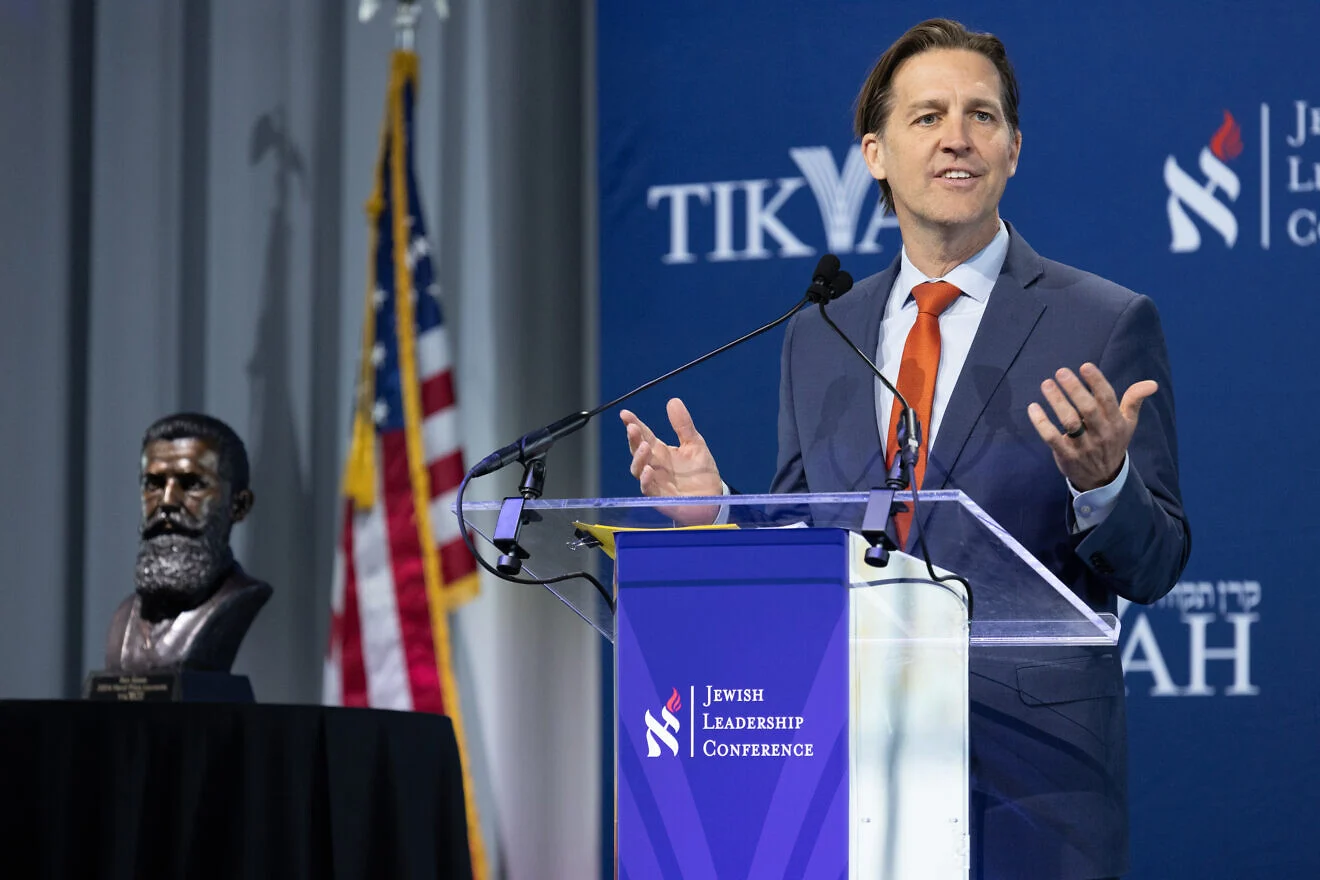
WASHINGTON — Former U.S. Sen. Ben Sasse, a prominent pro-Israel advocate, outspoken defender of the Jewish community and former president of the University of Florida, said Tuesday that he has been diagnosed with stage-four pancreatic cancer and does not expect to survive the disease.
Join our WhatsApp groupSubscribe to our Daily Roundup Email
“Advanced pancreatic cancer is a death sentence,” Sasse said in a written statement. “But I already had a death sentence before last week too. We all do.”
Sasse, 53, a Republican and a Christian conservative who has frequently spoken out against antisemitism and in support of Israel, said he was surrounded by family and close friends and was approaching the diagnosis with faith and clarity.
“As a Christian, the weeks leading up to Christmas are a time to orient our hearts toward hope,” he said, adding that while the diagnosis was grim, he felt deeply grateful for his relationships and his life’s work.
Friends-
This is a tough note to write, but since a bunch of you have started to suspect something, I’ll cut to the chase: Last week I was diagnosed with metastasized, stage-four pancreatic cancer, and am gonna die.
Advanced pancreatic is nasty stuff; it’s a death sentence.…
— Ben Sasse (@BenSasse) December 23, 2025
Sasse served two terms representing Nebraska in the U.S. Senate before resigning in 2023 to become president of the University of Florida, a role he later stepped down from. He previously led Midland University in Nebraska and has remained active in public discourse on higher education, free speech and antisemitism on college campuses.
In recent years, Sasse has emerged as a strong ally of the Jewish community, sharply criticizing rising antisemitism in academia, particularly following the Oct. 7 Hamas attack on Israel. He has condemned campus protests that he said crossed into intimidation and hate, arguing that universities have abandoned their core mission of truth-seeking and moral clarity.
In 2024, Sasse was honored by the Tikvah Fund for his public leadership and support of Jewish causes, despite not being Jewish himself — a distinction he noted with humility at the time.
Sasse said he plans to continue speaking candidly as his health allows, framing his diagnosis as a reminder of life’s urgency rather than its end.
“We’re all on the clock,” he said. “The question is how we use the time we’re given.”