GREENVILLE, S.C. (VINnews) — More than 80 years after his fighter plane crashed during a combat mission over China, a Jewish American pilot with the famed Flying Tigers was finally laid to rest on U.S. soil last week, closing a chapter that had remained unfinished since World War II.
Join our WhatsApp groupSubscribe to our Daily Roundup Email
U.S. Army Air Forces 1st Lt. Morton Sher, killed in action in 1943 at age 22, was buried Sunday at a cemetery in Greenville, South Carolina, where a headstone bearing his name — and an empty grave — had stood for decades.
After 82 years, the remains of Lt. Morton Sher, a WWII Army pilot KIA, have finally returned home. Lt. Sher passed on August 20, 1943, and was laid to rest on December 14 on what would have been his 105th birthday. pic.twitter.com/EOMy5h0yV7
— Military Support (@MilitaryCooI) December 15, 2025
Sher was flying a P-40 Warhawk with the 76th Fighter Squadron, 23rd Fighter Group, 14th Air Force, the unit that carried on the legacy of the original Flying Tigers in the China-Burma theater. He was killed Aug. 20, 1943, when his aircraft went down near Hengyang in China’s Hunan province during a combat mission against Japanese forces.
Born in Baltimore, Sher later moved with his family to Greenville, where he was active at Congregation Beth Israel and became a founding member of the local chapter of Aleph Zadik Aleph, the B’nai B’rith Youth Organization’s teen fraternity. After studying commerce at the University of Alabama, he enlisted in the Army Air Corps and initially flew security missions over the Panama Canal before being deployed to China.
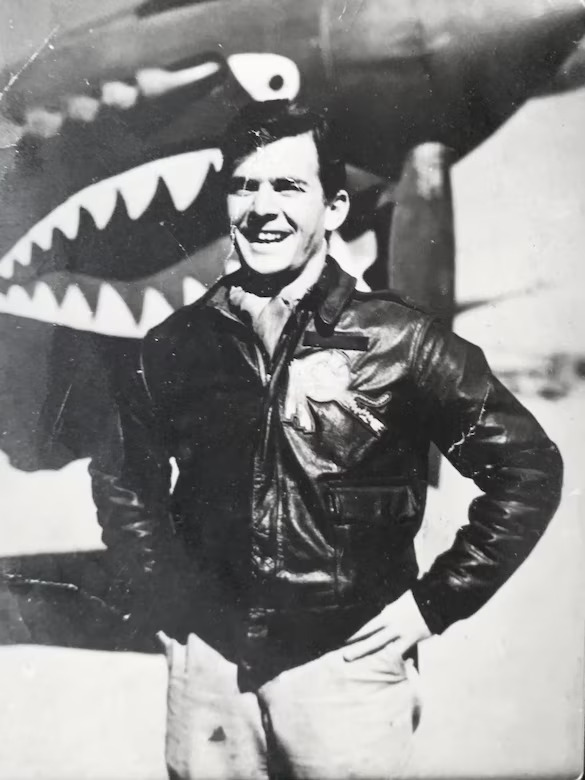
Sher flew dangerous escort and strike missions over some of the most treacherous terrain of the war, including supply routes over the Himalayan Mountains. In October 1942, engine damage forced him to land in a Chinese village, where residents welcomed him as a hero, hosting a celebratory feast and escorting him through nearby mountain villages back to his base.
“I sang a few American songs for them, and they were highly pleased,” Sher later recalled in an Army newsletter that was picked up by The Associated Press. “The banquet turned out to be one of the biggest surprises of the trip.”
Sher was shot down once before his final mission and returned to combat despite opportunities to leave the front lines. According to military historians, he turned down an offer to return home as an instructor pilot, choosing instead to continue flying combat missions.
The day before he was killed, Sher wrote to his parents explaining his decision. “I let another pilot take that instructing job,” he wrote. “I find things too exciting here to leave right now.”
When Sher’s plane crashed in 1943, local villagers honored him by placing a memorial stone at the site. He was posthumously awarded the Purple Heart, which was presented to his mother later that year. A postwar U.S. investigation concluded in 1947 that his remains had been destroyed in the crash, and he was officially classified as killed in action and unrecoverable.
That status changed decades later.
In 2012, a private citizen contacted the Defense Department agency responsible for recovering missing U.S. servicemembers after locating Sher’s memorial site in China. Initial recovery efforts in 2012 and 2019 were unsuccessful. A more extensive search conducted in 2024 uncovered aircraft wreckage and human remains, which were later confirmed through DNA testing to belong to Sher.
“We never knew Morton, but he was larger than life in the stories our family told us, his photos and his writings,” said his nephew, Bruce Fine. “He filled his life with meaning and lived every day to its fullest.”
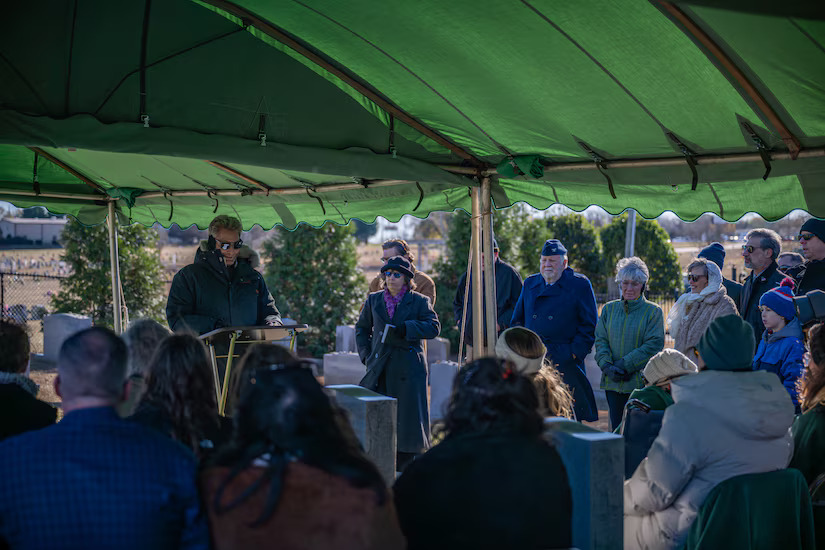
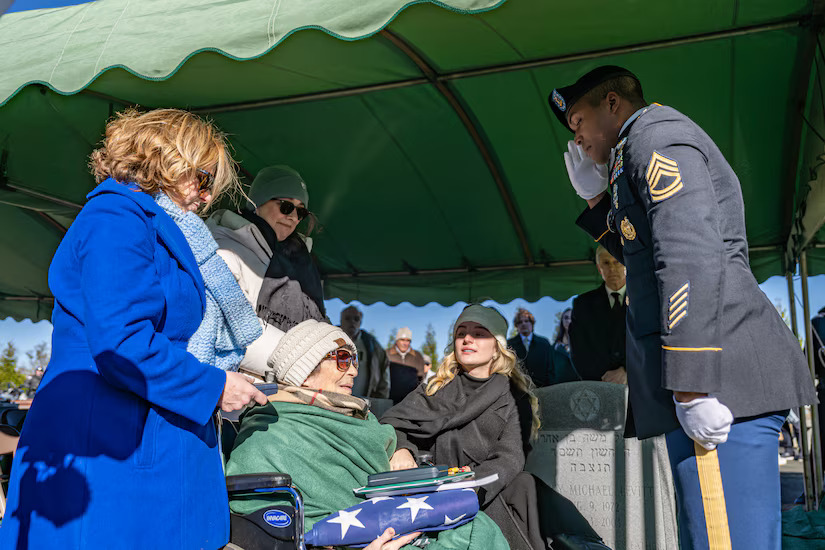
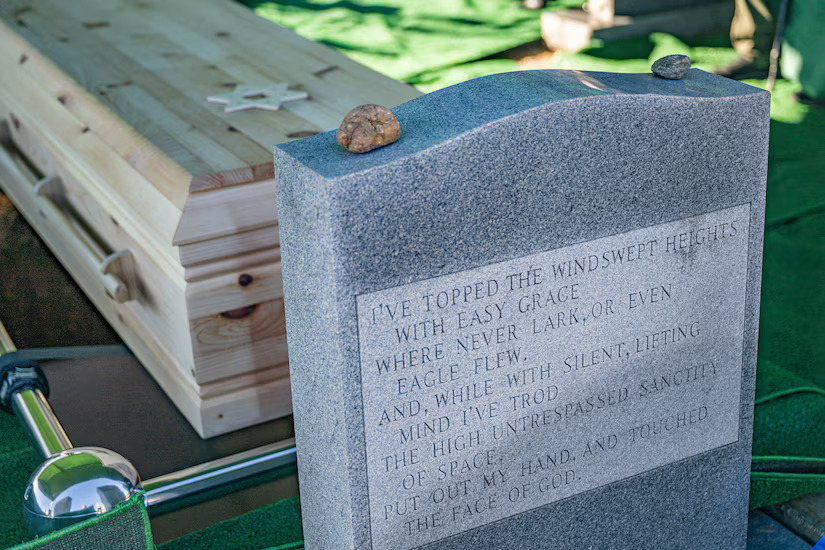
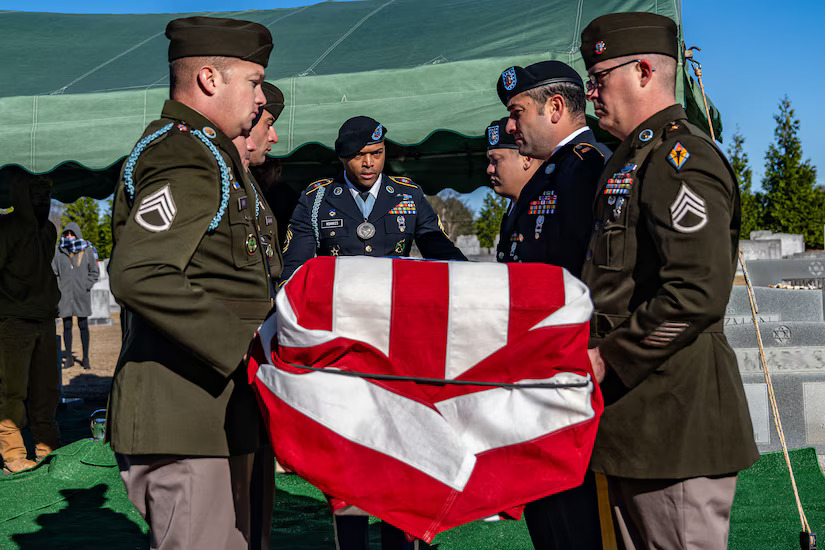
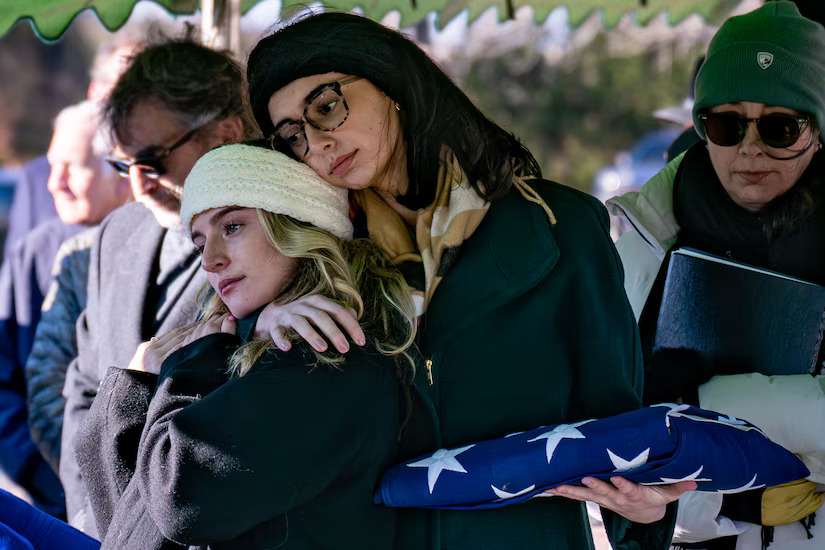
Sher was welcomed home with full military honors, including an honor guard and a flyover by modern fighter aircraft bearing the same shark-tooth insignia once flown by the Flying Tigers. His wooden casket was draped with the American flag and topped with a Star of David. Family members and friends placed stones on his headstone in Jewish tradition and poured soil from Israel over his grave.
“None of us knew Morton Sher until recently,” said Col. Brett Waring, commander of the 476th Fighter Group. “But as soon as we learned of his return, we knew it was our duty to honor him. The bond we share never dies. No one is left behind, and no one is forgotten.”
Waring said Sher’s return was made possible through cooperation among U.S. recovery teams, Chinese authorities and local civilians, reflecting a shared commitment that transcended borders and generations.
For Sher’s family and community, the burial marked the fulfillment of a long-held promise.
What began as a name etched into stone more than eight decades ago is now a place of remembrance — a final homecoming for a pilot whose service and sacrifice were never forgotten.