
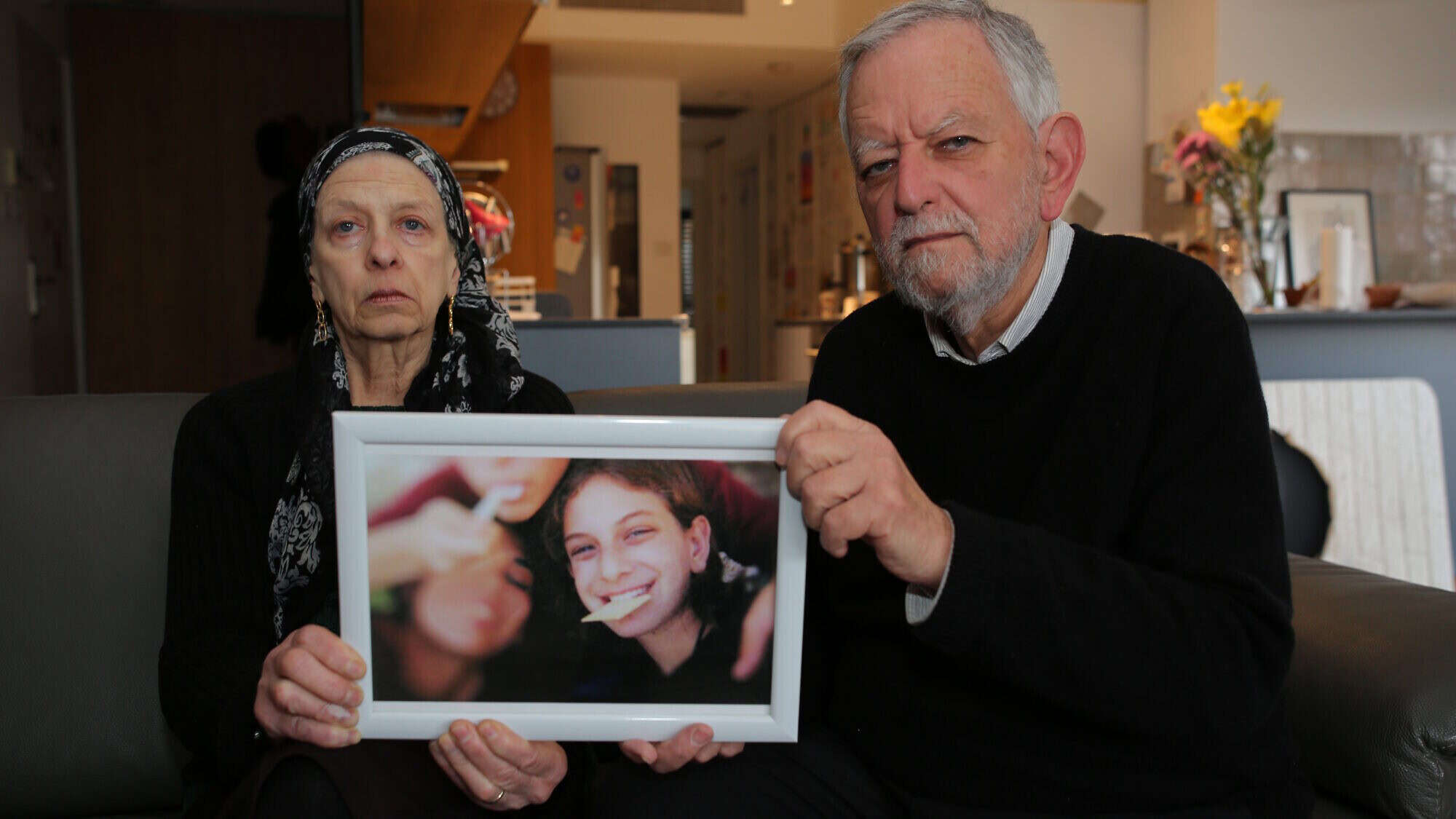
NEW YORK – Twenty-four years after his 15-year-old daughter, Malki, was murdered in a Hamas suicide bombing in Jerusalem, Arnold Roth is asking a question that remains unanswered: Why is the terrorist responsible for her death living freely as a celebrity in Jordan?
Join our WhatsApp groupSubscribe to our Daily Roundup Email
Roth joined JNS in the studio on Wednesday to discuss the ongoing failure to bring Ahlam Tamimi to justice. Tamimi led the suicide bomber to the Sbarro pizzeria in downtown Jerusalem on Aug. 9, 2001, where 16 people were murdered, including seven children and three Americans, one of whom was pregnant.
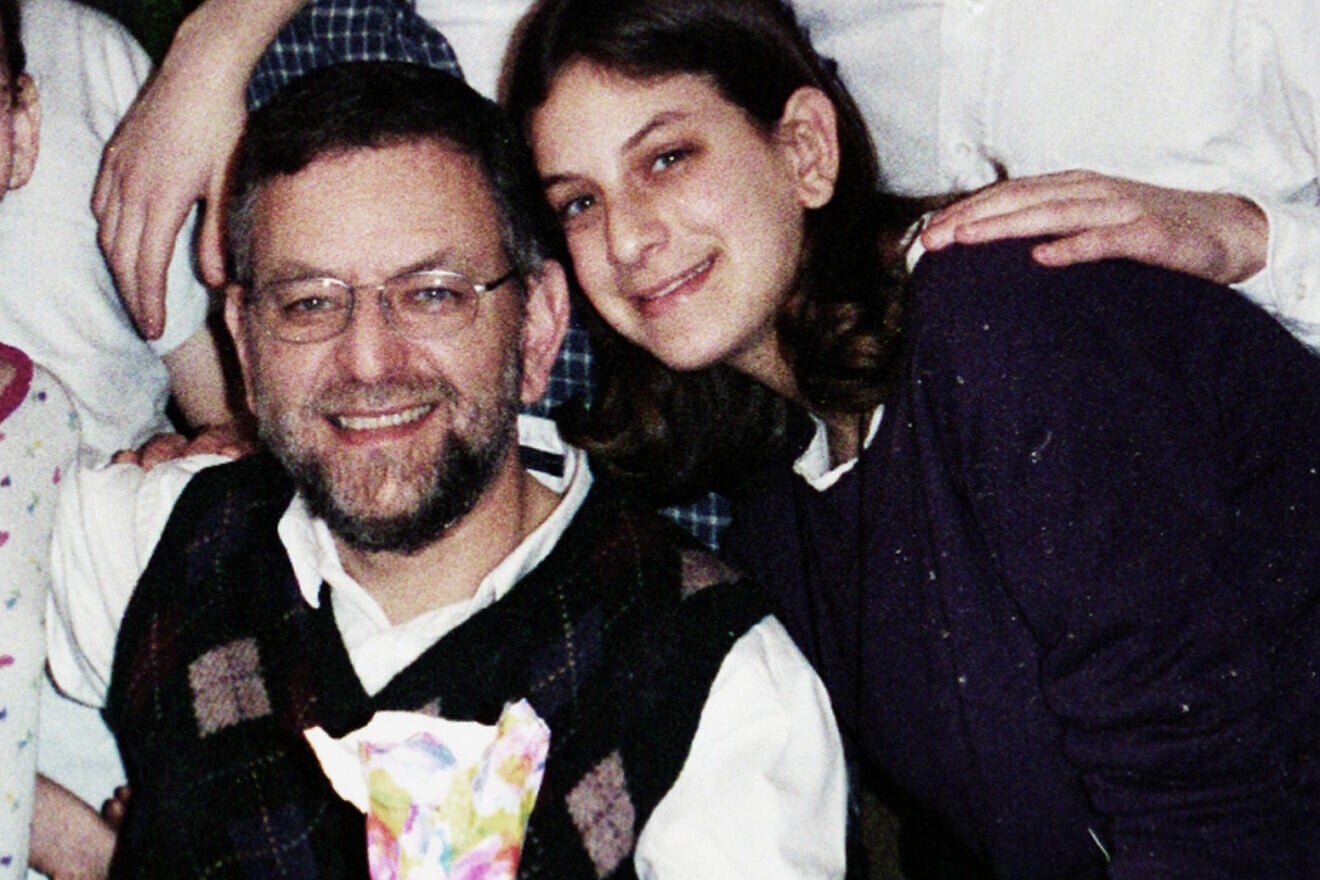
On Nov. 27, Roth marked what would have been Malki’s 40th birthday with a JNS op-ed titled, “Why is U.S. justice for its victims of terror still thwarted?”
“That’s a terrific question,” he said when asked by JNS why Tamimi remains free. “And since I don’t know the answer, we can end the interview at this moment.”
He did not. Instead, Roth laid out a story that has consumed him since 2011, when Tamimi was released from Israeli prison as part of the Gilad Shalit deal and flown to Jordan. He was referring to the deal in which captured IDF soldier Gilad Shalit was released by Hamas in exchange for 1,027 Arab prisoners being held, many of them terrorists.
Tamimi, who is now 45, he emphasized, is not simply free. “What’s appalling in the story is that there’s no attention being paid to the horrifying reality that Tamimi is free; not only free, but a celebrity living a dream life in Jordan. And that has to change.”
America’s most wanted female terrorist
Tamimi was charged by U.S. federal prosecutors in 2013 for the murder of American citizens. She is listed on the FBI’s Most Wanted Terrorists list and is the subject of a $5 million U.S. State Department reward.
“Without a doubt, this woman is America’s most wanted female fugitive,” Roth said. “And yet she’s not only free, but she’s a very big deal in Jordan.”
Roth stressed that the failure to extradite Tamimi is not the result of legal ambiguity. “There is a treaty between the United States and Jordan,” he said. “There’s no question that that treaty is valid and binding.”
Instead, he argued, the failure is one of political will. “The best way to go … involves only the United States,” Roth said. “It really needs to be taken in the White House.”
He added that allowing the situation to persist damages U.S. credibility. “Anyone can and absolutely should respect American justice if they’re in the political role of defending American justice,” he said. “They should certainly protect America’s diplomatic interests, which are damaged by allowing Jordan to get away with this.”
From Sydney to Jerusalem
Roth, who grew up in Australia before making aliyah to Israel and settling in Jerusalem with his American-born wife, Frimet, and family 36 years ago, said the recent terrorist attack at Bondi Beach in Sydney struck him deeply.
“It’s very confronting in every sense of the word to see what’s happened in Sydney, the massacre at Bondi Beach, that was done in the name of Islam by the people who say it was done in the name of Islam,” he said. “Very similar to what happened [in Jerusalem], where the woman acted for Hamas.”
He criticized Australian leaders for focusing on gun laws while ignoring rising antisemitism. “Changing the gun laws won’t change the reality that Jews can’t march in the streets or even walk casually in the streets of Melbourne or Sydney … without being harassed, attacked, offended and worse,” Roth said.
He drew a parallel to the situation in the United States and elsewhere. “Clarity and consistency are absolutely essential,” he said. “America is demonstrating an absence of clarity and an absolute absence of consistency.”

Remembering Malki
Asked about his daughter, Roth paused. “It’s a lot easier for me to talk about the murder than it is to talk about Malki,” he said.
Malki, the fourth of seven children, was deeply devoted to helping others, particularly children with special needs, including her younger sister, Haya.
After her murder, the family established the Malki Foundation to carry forward her legacy.
“It does wonderful things in a very low-profile way,” Roth said about the foundation, which is now in its 25th year. “All focused on the things that Malki excelled in—being empathetic, being supportive.”
Justice delayed—and denied
Roth was blunt when asked about Israel’s policy of releasing terrorists in exchange for hostages, particularly during the recent war. “We should never do deals with terrorists,” he said. “All you do when you do that is enlarge their appetite for more.”
He argued that the consequences were foreseeable. “Oct. 7 is a consequence of the Shalit deal of 2011,” Roth said.
Asked how justice can still be achieved, Roth pointed to three groups he believes have failed to act: the media, the U.S. Congress and American Jewish leadership.
“The media don’t give any news coverage to this shocking situation,” he said. “Congress hasn’t acted. And America’s Jewish leadership, with a handful of notable exceptions, has not spoken out clearly or consistently.”
“I want them to be saying what needs to be said,” he insisted. “That this is an affront to justice.”

A father’s final message
As the interview concluded, Roth returned to his daughter—not as a symbol, but as a child whose life was cut short by terrorists.
“I want people to know about my daughter’s life because she’s not a cause,” he said. “The loss of a child is made immeasurably worse when you see the person who did it dancing on Malki’s grave—triumphant, a celebrity, protected.”
He added: “When we’re dealing with people who engage in terrorism, we need a different approach.”