
by Rabbi Yair Hoffman
Join our WhatsApp groupSubscribe to our Daily Roundup Email
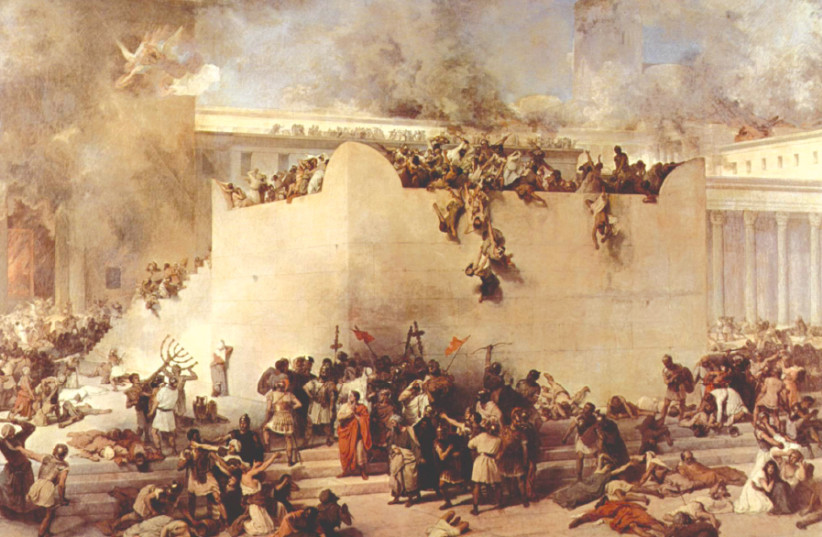
On this day, over 2,500 years ago, Nebuchadnezzar HaRasha surrounded Yerushalayim.
The siege had begun. Inside those walls, we knew our world was about to end. Everything that followed—the destruction of the Beis HaMikdash, the murder of countless Jews, the galus—it all started right here, on the tenth of Teves – this Tuesday.
But what are we really mourning? And what does Hashem want from us?
The Navi Zechariah (8:19) gives us an incredible promise: one day, all four fasts—17 Tammuz, 9 Av, 3 Tishrei, and 10 Teves—will become days of joy. But there’s a catch. We have to learn to love two things: truth and shalom.
Rabbi Chaninah teaches (Shabbos 55a) that Hashem’s seal is truth. Shalom is also one of Hashem’s names. If we truly love these ideals, the fasts will be transformed. When we mourn properly, we grow in Avodas Hashem. Let’s make the most of it.
Purpose of the Fasts
Fasting does two things: it wakes up our hearts and pushes us toward teshuvah (Rambam Hilchos Taanis 5:1). The Chayei Adam (133:1) warns that if we miss what’s important, we’ve lost the whole point.
“Waking up our hearts” means feeling the loss—the enormous loss—of the Shechinah living among us.
Klal Yisrael is different from other nations. We have the ability to achieve dveikus b’Hashem—a closeness to Hashem that no one else can reach. This is what gave us our Nevi’im. This is what lifts our tefillos, our Torah learning, our midos. The Chofetz Chaim lived among us because of this power. The Beis HaMikdash made that connection even stronger.
When we lost the Beis HaMikdash, we lost part of who we are – like losing our right arm.
Hope
But Zechariah gives us hope. If we love emes and shalom, that closeness returns. So especially around fast days, we should reach out to people we’re not getting along with. We should try harder to be honest in everything we do.
When the Fast Begins
For all fasts except Yom Kippur and Tishah B’Av, the fast starts at alos ha’shachar (dawn)—5:51 AM in Lakewood. If you planned the night before to wake up early and eat, you may do so. But you have to have that in mind before you go to sleep.
There’s a difference between men and women. Men can only eat more than a k’beitza of mezonos if they start more than 30 minutes before dawn. Otherwise, they can only have less than a k’beitza—about 2.2 fluid ounces (MB 89:27). Women don’t have this restriction, according to Rav SZ Auerbach zt”l (Ishei Yisroel 13:71).
Who Must Fast
All healthy adults must fast, including women (SA OC 550:1). Girls 12 and older and boys 13 and older must fast. The custom some women have to skip these fasts is wrong—it goes against Shulchan Aruch.
The Mishnah Berurah (550:5) says children old enough for chinuch should eat only simple foods. A sick person doesn’t have to fast (M.B. 550:4,5), even if it’s not dangerous. But they shouldn’t eat fancy foods—no sushi or steak. Ask your Rav.
Pregnant or nursing women don’t have to fast on minor fasts (OC 554:5). The Rema says some have a custom to fast anyway, but current medical data from Eretz Yisroel suggests following the lenient view. Ask your Rav.
If You Accidentally Ate
If you forgot and ate, keep fasting (OC 568:1). If you made a berachah before realizing, taste a tiny bit so it’s not a berachah l’vatalah.
Showering and Brushing Teeth
Showering is allowed on minor fasts. The Mishnah Berurah (550:6) says a ba’al nefesh should skip hot water. Cold or warm is fine. Washing your face, hands, and feet with hot water is also permitted.
You shouldn’t brush teeth on a fast. If you’re really uncomfortable, you can be lenient (M.B. 567:11)—just tilt your head down so you don’t swallow. Same goes for mouthwash.
Tefillah Additions
In Shacharis, say Avinu Malkeinu and Selichos. In Minchah, add Aneinu and Avinu Malkeinu. If you forgot Aneinu, don’t repeat Shemoneh Esrei. If you’re not fasting, skip Aneinu. Without a minyan, don’t say the 13 middos (M.B. 565:13). In Minchah, say Sim Shalom instead of Shalom Rav.
May this fast wake something up inside us—and bring closer the day when these fasts become celebrations.
The author can be reached at [email protected]
thank you, Rabbi Hoffman.