
By Rabbi Yair Hoffman
Join our WhatsApp groupSubscribe to our Daily Roundup Email
“Ma rabu maasecha Hashem, kulam b’chochmah asisa”—“How great are Your works, Hashem; You made them all with wisdom” (Tehillim 104:24).
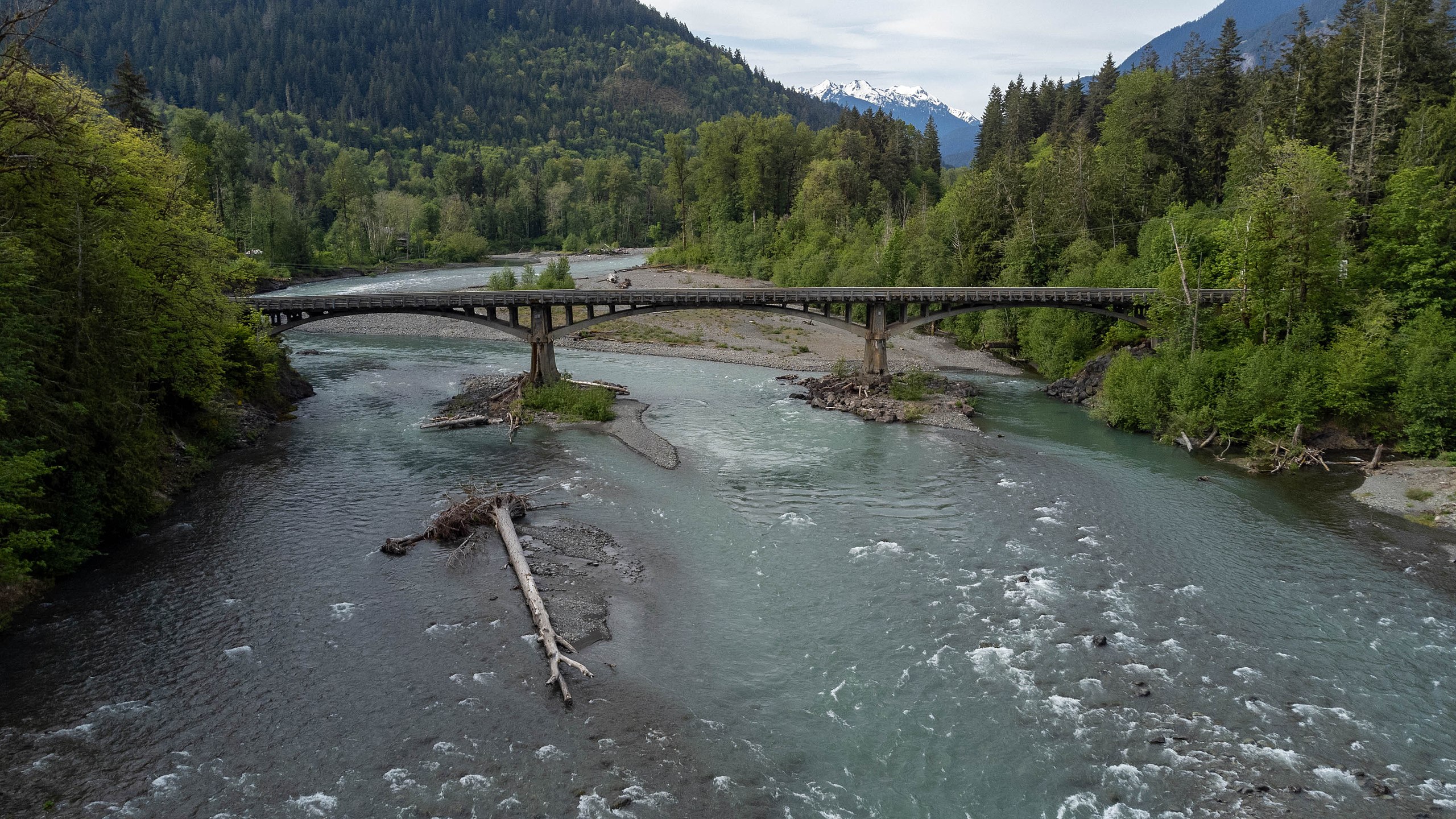
There is a fascinating bit of history connected to the Elwha River. The Elwha River is a 45-mile river on the Olympic Peninsula in the U.S. state of Washington. It once thrived, until two massive dams, built in 1913 and 1927, blocked its natural flow.
The dams were constructed to generate hydroelectric power for the local community and regional industries, particularly logging and lumber operations. At the time, river-generated electricity was an important driver of economic development in the area.
For nearly a century, not a single salmon swam to its upper waters.
By the late 1900’s, the amount of electricity produced by the dams had become relatively small and was fully replaced by the regional power grid and other generating sources. Studies showed that the dams were no longer required to meet local power needs.
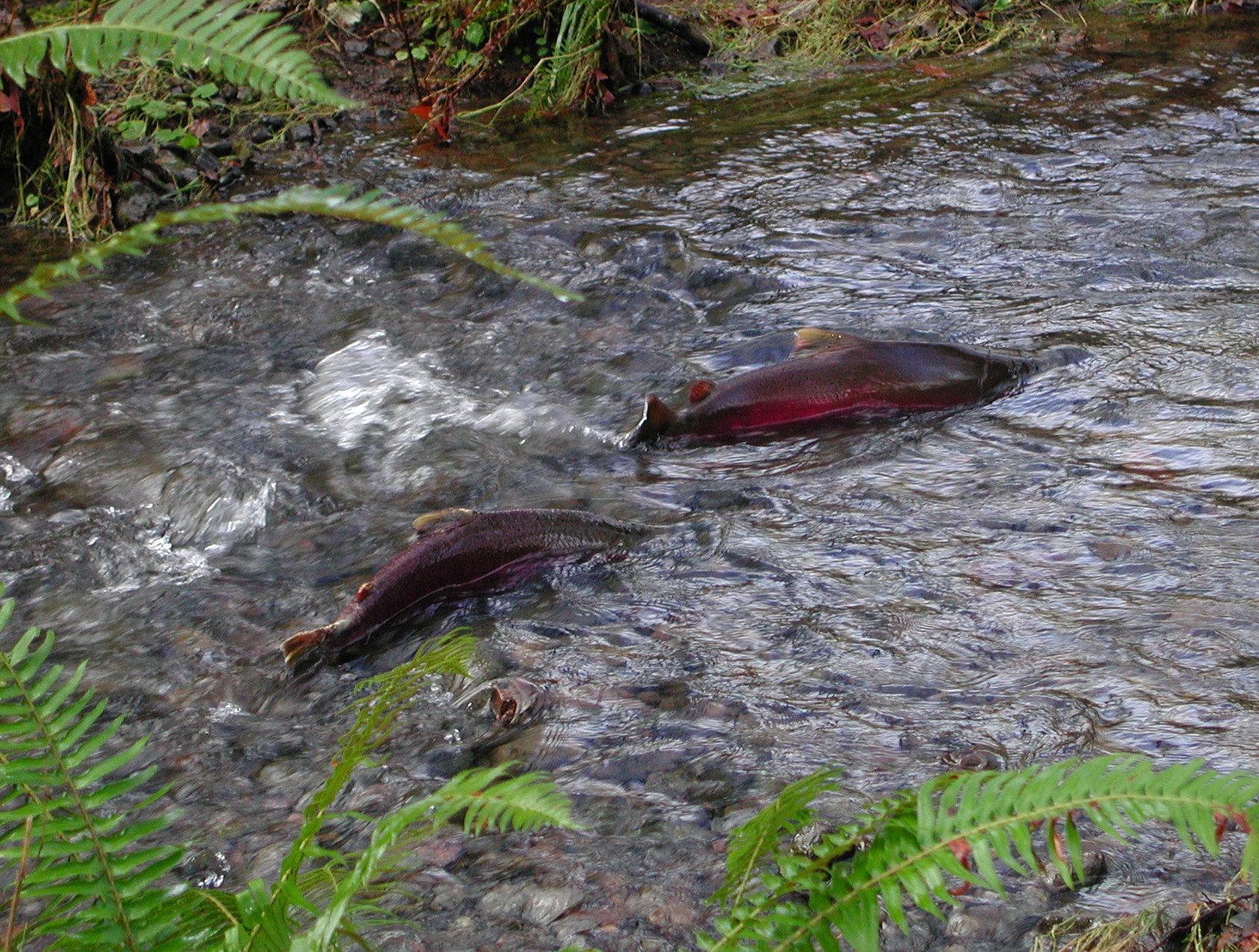
Before the dams, over 400,000 salmon would travel upstream every year. Chinook salmon were so enormous that some weighed over 100 pounds. After the dams, there was silence. The upper seventy miles became a watery graveyard.
In 2011, engineers dismantled both dams.
But now came a problem. How do you bring salmon back to a river they had never known? Nearly a century had passed. Dozens of generations of salmon had never seen those waters. No parent, grandparent, or ancestral memory connected living fish to the upper Elwha.
Scientists released 8,000 young salmon in 2012—fish that had never been there, whose lineage had never been there. The researchers hoped for perhaps a 1% return. That is standard. Release 10,000 fish, and you are fortunate if 100 come back.
By 2015, over 3,000 had returned. A 37.5% return rate. Modern hatcheries often celebrate just 5%. These fish returned to a place absent from their species’ living memory.
The Gemara in Shabbos (77b) teaches: “Kol mah shebara Hakadosh Baruch Hu b’olamo, lo bara davar echad l’vatalah”—everything Hashem created in His world, He created nothing without purpose. The salmon make this teaching visible.
Scientists then discovered that salmon do not rely on a single navigation system. They use several, operating together. They sense the Earth’s magnetic field. They track the position of the sun. They imprint the chemical signature of water at different stages of their lives. Some evidence suggests they may even orient by stars.
Each system requires multiple components. None functions alone. A partial system offers no survival advantage. A salmon that cannot complete its journey does not live long enough to reproduce.
These systems work only when complete.
When the salmon returned to the Elwha, they spawned. Spawning means that the female digs a shallow nest in the riverbed gravel and lays her eggs. The male fertilizes them. After this single act of reproduction, Pacific salmon die. They reproduce once, and only once, at the end of their journey.
After spawning, the salmon die in the river.
What appears to be an end is actually a beginning. How so? Each salmon carcass releases nutrients—nitrogen, phosphorus, and carbon—drawn from the ocean and delivered into the freshwater ecosystem. Trees near salmon streams grow significantly larger than those farther away. Researchers measured that some riverside trees receive up to 25% of their nitrogen from decomposing salmon.
For nearly a century, the Elwha’s forests lacked this input. After the salmon returned, marine-derived nitrogen appeared in plants within just a few years. Insect populations increased. Birds of prey returned. Mammals such as bears reappeared.
The salmon also rebuilt the river itself. When female salmon dig their nests, thousands of fish moving gravel displace enormous amounts of sediment. Pools form. Gravel is sorted. Compacted streambeds loosen. The fish physically engineer the habitat their own offspring will need to survive.
Dovid HaMelech describes this coordinated system when he writes, “Sholei’ach ma’ayanim ban’chalím, bein harim yehaleichún”—“He sends forth springs into the streams; they flow between the mountains” (Tehillim 104:10).
Improved habitat supports more salmon. More salmon leads to more river modification. The cycle continues.
For this system to function, everything must exist together: navigation to locate the river, instinct to spawn, gravel suited for nests, death in the correct location to deliver nutrients, plants capable of absorbing ocean nitrogen, insects that respond to plant growth, and animals that redistribute those nutrients deeper into the forest.
Remove one element and the system collapses.
This is where the implication becomes unavoidable. These components do not help incrementally. Half a navigation system is useless. Spawning behavior without proper habitat achieves nothing. Nutrient transfer without organisms capable of using it serves no function. Each part requires all the others to already be present and coordinated.
This is not chance layered upon chance. It is yad Hashem through integrated design.
Dovid HaMelech therefore declares, “Ki mah gadlu maasecha Hashem, me’od amku machshevosecha”—“How great are Your works, Hashem; how very deep are Your thoughts” (Tehillim 92:6). Depth means intention. Complexity means planning. Interlocking systems point to a single, guiding Wisdom.
This is precisely what the Chovos HaLevavos teaches in Shaar HaBechinah. A person is obligated to study the created world, to examine how it functions, and through that observation to recognize the Yad Hashem. The natural world is not a distraction from emunah. It is one of its primary teachers.
There is one more detail worth noting. The river had been blocked for nearly a century. Recovery was expected to take far longer. Once the barriers were removed, restoration began almost immediately. The system did not need to be invented. It resumed.
Hamechadesh b’tuvo b’chol yom tamid maaseh Bereishis. Creation is continuously renewed.
The salmon of the Elwha testify to this renewal. Their journey, instincts, life cycle, and ecological impact are not isolated wonders. They are coordinated expressions of wisdom.
Kulam b’chochmah asisa.
You made them all with wisdom.
The author can be reached at [email protected]
What a beautiful story & explanation of HaShems wonders
Similar to the story of our people. We are returning to our ancestral homeland. It was a wasteland when we were away. Now, after 2000 years years the land is thriving. We are thriving. We just have to complete it with the Bais Hamikdash and the return of the Shechinah.