
By Rabbi Yair Hoffman
Join our WhatsApp groupSubscribe to our Daily Roundup Email
A Towering Yet Hidden Influence
Perhaps no other Torah personality embodies such a stark contrast between profound impact and relative obscurity. Rav Simcha Zissel Ziv Broide of Kelm (1824-1898) was the teacher of luminaries including the Alter of Slabodka, the Alter of Novardik, Rav Yechezkel Levenstein, Rav Reuvain Dov Dessler, and Rav Yeruchem Levovitz. Virtually every yeshiva established in Europe, America, and Ashkenazic Eretz Yisroel was either founded or significantly influenced by the Alter of Kelm’s students. Yet remarkably few people today are familiar with the details of his life and the yeshiva he built in Kelm. His teachings continue to resonate through generations, shaping Jewish thought while the man himself remains in the shadows of history.
Early Life and Development
Born in Kelm to a family that included descendants of the Chacham Tzvi, Rav Simcha Zissel moved to Kovno after marriage. There, he studied under Rav Yisroel Salanter at the Nevyozei Kloiz, alongside other notable students including Rav Yitzchok Blahzer and Rav Naftoli Amsterdam.
Following Rav Yisroel’s guidance, he traveled to Zhagory to strengthen Mussar there, then spent two years in Moscow followed by a year in St. Petersburg. Though offered the prestigious rabbinate of St. Petersburg—Russia’s largest city—he declined, recommending Rav Yitzchok Blahzer instead. This humility characterized his approach throughout his life, prioritizing substance over status and deeper meaning over public acclaim.
Establishing the Kelm Talmud Torah: A Fortress of Discipline
In 1864, Rav Simcha Zissel established the Kelm Talmud Torah to propagate Rav Yisroel Salanter’s ideals. As one of the three closest disciples of Rav Yisroel, the Alter introduced a program of extraordinary discipline that would transform this institution into a spiritual fortress unlike any other in the Jewish world.
Within the walls of the Talmud Torah, an atmosphere of absolute focus reigned supreme. Talmidim sat before their gemaras for hours on end, their eyes never leaving the sacred text. The silence was complete—not a whisper, not a shuffled foot disturbed the sanctity of learning. Each student, some as young as twelve years old, developed powers of concentration that seemed superhuman to outside observers.
This legendary discipline once caught the attention of a local nobleman. (In this author’s opinion it was probably, Bronislavas Gruzevskis.) While hosting an elaborate feast for his friends, the nobleman boasted about the remarkable yeshiva in his domain, claiming that nothing could distract these students from their studies. His drunken companions scoffed at such a notion. Emboldened by wine and skepticism, the entire mob descended upon the yeshiva, creating a tremendous commotion—shouting, banging on tables, and making every effort to break the students’ concentration. Yet not a single boy raised his head to look at the source of the disturbance. The nobleman’s guests stood in stunned silence, witnessing a power of will they had never before encountered.
The Alter himself was the embodiment of this self-mastery. With meticulous attention, he could account for every thought that had passed through his mind at day’s end. His control over his emotions was so complete that he would never permit himself to express anger unless he first donned a special garment set aside specifically for that purpose—a physical reminder of the conscious choice to experience this emotion.
His curriculum included secular studies (limudei chol), both to counter the influence of the Haskalah movement and to develop Torah scholars capable of leading Jewish communities throughout the Pale of Settlement. Facing government interference, he relocated the yeshiva to Grobin around 1877.
He returned to Kelm in 1881, leaving his son, Reb Nochum Zev, in charge at Grobin while continuing to oversee operations from afar. Despite declining health making this arrangement difficult, when he consulted Rav Yisroel Salanter about closing the yeshiva, he was advised against it. Nevertheless, his deteriorating condition eventually forced him to close the Grobin branch by 1886.
In 1892, many of Rav Simcha Zissel’s Talmidim moved to Eretz Yisroel and established a “Beis HaMussar” in Jerusalem under his direction, extending his influence to the Holy Land and planting seeds for future generations of Torah scholars.
Final Years and Legacy
The Alter of Kelm passed away on the 8th of Av (July 26, 1898). At his levaya, Rav Eliezer Gordon, Rosh Yeshiva of Telze, testified that the Alter knew every word of Rashi and Tosafot by heart in more than half of Shas, and every section of Shulchan Aruch by heart. He further remarked, “Beyond his complete greatness in Torah, I never heard a single word from him that was not Torah or fear of Heaven.”
In “Tnuas HaMussar,” Rav Dov Katz identifies three fundamental principles of learning that the Alter of Kelm taught:
- One should become emotionally engaged in learning.
- After studying, one should always ask: “What did I know before, and what do I know now?”
- One should always probe beyond the superficial to reach the core of the matter.
These principles reflect his penetrating approach to Torah study, emphasizing depth over breadth and transformation over mere knowledge acquisition.
Leadership After the Alter’s Passing
After Rav Simcha Zissel’s death in 1898, the Talmud Torah in Kelm was led by a succession of distinguished Talmidei Chachomim: The yeshiva was first led by his younger brother, Reb Aryeh Leib Broide, who guided it until 1928. While many family members began moving to Eretz Yisroel, his son-in-law, Rav Tzvi Hirsch Broida, remained in Kelm to lead the yeshiva until his passing in 1913. Following this, his son, Rav Nachum Z’ev Ziv took leadership from 1913 until his own passing in 1916. The mantle then passed to Rav Reuvain Dov Dessler, who led the yeshiva from 1916 until 1935. After Rav Dessler’s passing, Rav Doniel Moshovitz assumed leadership and guided the yeshiva for the final six years of its existence.
The famed Mashgiach of Lakewood’s Beis Medrash Gavoah, Rav Nosson Tzvi Wachtfogel zt”l, who studied in Kelm under Rav Doniel Moshovitz, once shared: “Whenever my Rebbe, Rav Doniel Movshovitz, discussed the Alter of Kelm, he would completely nullify his own opinion and instead toil diligently to understand what the Alter meant.” When asked why he invested such effort, Rav Doniel explained: “The Alter of Kelm did not open an eyelid or move his little finger without a reason and without preparation. Everything was calculated, befitting the level of previous generations. How can we possibly imagine that we are capable of understanding such a giant who didn’t even move his little finger without first thinking about it?”
Rav Doniel continued teaching Torah as Rosh Yeshiva until July 1941, when the Nazis murdered everyone in Kelm, including the Rosh Yeshiva and his students. The glory of Kelm was no more. Yet the Alter’s teachings would continue to resonate through the words and deeds of those who had studied his wisdom.
The Alter’s Wisdom: Key Teachings
Elevating One’s Worldview
The Alter of Kelm emphasized the transformative power of perspective. He would counsel his students: “Children! If one views the world as ‘life is simple’—then one remains simple. If one views the world from the perspective of ‘life can be a lofty spiritual endeavor,’ then one’s life can be a very lofty spiritual experience. One must have aspirations in life—and not just any aspirations, but the loftiest ones.” This profound insight into how our perspective shapes our reality was later cited by Rav Chatzel Levenstein in Ohr Yesharim.
The Power of the Few
Drawing from his Rebbe’s wisdom, the Alter would share: “My Rebbe, Rav Yisroel Salanter, used to point to the Gemara in Yevamos 62b where Rabbi Akiva had 24,000 students who all passed away in one short period. He then taught just five students—and these five established Torah. We see from here that four or five people alone can build the world.” This teaching emphasizes quality over quantity and the immense impact even a small group can have when properly directed.
True Compassion for the Poor
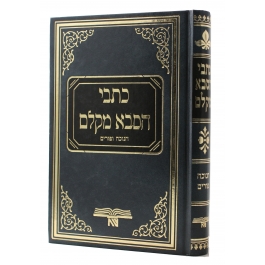
In his writings (Kisvei HaSaba MiKelm), the Alter explained the deeper meaning of caring for the less fortunate: “The meaning of ‘veyihiyu aniim bnei baisecha’ is that you should view the poor as members of your own household, constantly looking out for their welfare.” This represents not mere charity but a complete re-framing of our relationship with those in need.
The Core of Character Development
The Alter taught that character development has both a focal point and a vulnerability: “Each person has one central positive character trait that he can perfect. If he can perfect that trait within himself, it creates a path to all other virtues. The same is true with negative traits. Each person has one central negative trait that, if left unchecked, can completely unravel him.” This insight from Kisvei HaSabba offers a strategic approach to self-improvement.
Personal Boundaries Beyond Law
On the subject of spiritual safeguards, the Alter wrote in Chochma uMussar: “Our sages established various safeguards for Mitzvos and prohibitions—but not for every commandment, recognizing that most people could not handle excessive restrictions. However, each individual is obligated to create personal boundaries in otherwise permitted areas to prevent violation of prohibitions or neglect of commandments.” This teaching emphasizes the importance of personalized spiritual protection.
The Gravity of Neglecting Torah
In his writings (Ksavim), the Alter emphasized the severity of wasting opportunities for Torah study: “There is no greater way to make oneself spiritually impure than the neglect of Torah study. The primary task of a person in life is to ensure that he is always engaged in Torah and Mitzvos.” This highlights the centrality of continuous Torah engagement in Jewish life.
The Necessity of Contemplation
Addressing obstacles to growth, the Alter identified: “The greatest hindrance to spiritual growth is the lack of deep contemplation and preparation.” This insight, cited in Imrei Ephraim, underscores the importance of thoughtfulness and preparation in spiritual advancement.
Self-Development When Teachers Are Absent
The Alter offered practical advice for periods without formal guidance: “Our Sages teach us, ‘Make for yourself a teacher’—but if you cannot find someone to be your teacher, then make yourself into a teacher by constantly engaging in Torah’s wisdom until you find a proper teacher again.” This teaching from Chochma uMussar emphasizes personal responsibility for growth even in challenging circumstances.
Practical Application of Learning
On the purpose of study, the Alter taught: “After learning, the more one applies his conclusions to practical situations, the more valuable his learning becomes.” This underscores the essential connection between theoretical knowledge and practical implementation.
The Dangers of Pride
Using contemporary technology as a metaphor, the Alter warned: “We can use the telegraph [or internet] as an illustration to understand the impact of even a brief moment of arrogance—it spreads so rapidly that it can instantly travel worldwide. When we consider ‘He humbles the proud and elevates the humble’ and contemplate the speed and intensity with which this divine principle operates, we recognize the necessity of distancing ourselves from pride and the importance of humility.” This insight from Kisvei HaSabba miKelm shows his ability to relate eternal truths to contemporary developments.
The Essence of Following Hashem
Finally, the Alter distilled the purpose of spiritual life: “The essential path of following Hashem is to rid oneself of earthly desires and focus on bringing joy to others. This is the meaning of the Gemara in Sota 14a that the Torah begins with acts of kindness and ends with acts of kindness.” This teaching from Chochmah uMussar captures the essence of Torah living as transcending self-interest in favor of benefiting others.
Deeper Teachings of the Alter of Kelm
The Acquisition of Torah and the Importance of “Nosei B’ol” (Sharing Others’ Burdens)
In his work Chochmah Umusar, the Alter of Kelm addresses a well-known question about the Mishnah in Avos, which lists “nosei b’ol im chaveiro” (sharing the burden with one’s fellow) as one of the 48 ways to acquire Torah. How, he asks, does bearing others’ burdens relate to acquiring Torah knowledge?
The Alter provides a profound insight: The Torah is described as “Emes kneh” (acquire truth). Every word of Torah represents absolute truth. Therefore, only someone connected to truth can truly connect with Torah. However, self-love (ahavas atzmo) is “the ultimate source of falsehood.” By thinking about others and helping them, one gradually detaches from self-love—from that ultimate falsehood. Only then can one connect with the truth that is Torah.
When focused solely on oneself, a person becomes blinded and can no longer perceive truth. They remain trapped in falsehood. The only escape is through nosei b’ol—no longer thinking only about oneself, but about others. By constantly seeking ways to empathize with and assist others, one moves away from falsehood and gradually approaches truth. Only then can one achieve the “acquisition of truth” that is the acquisition of Torah. Someone consumed by self-interest cannot possibly connect with Torah’s truth. Only through bearing others’ burdens can one merit Torah acquisition.
The Power of Prayer: Tzadik Ben Tzadik vs. Tzadik Ben Rasha
The Torah tells us that Yitzchak stood in one corner praying while Rivkah stood in another corner praying. Yet the verse states, “vaye’etar lo”—Hashem answered his (Yitzchak’s) prayer. Rashi explains, “The prayer of a righteous person who is the child of a righteous person cannot be compared to the prayer of a righteous person who is the child of a wicked person.” Therefore, Yitzchak’s prayer, as a righteous person born to righteous parents, was answered before Rivkah’s prayer, though she was righteous herself, but born to a wicked father.
The Alter of Kelm offers a novel interpretation beyond the simple understanding that Yitzchak benefited from ancestral merit. He applies the principle from Yoma 29: “atiketah kashe mechadtah”—”the old is more difficult than the new.” This principle usually applies to learning: when reviewing material already studied, one requires greater effort and concentration than when learning new material.
The same principle applies to prayer, says the Alter. When one’s father was righteous and already prayed fervently, one might feel the work is already done, making sincere prayer more difficult. However, when one’s father was wicked, one understands the need to work harder, resulting in more heartfelt prayer. Paradoxically, precisely because prayer is more difficult for a righteous person born to righteous parents, it becomes more powerful when done properly. “One time with difficulty is better than a hundred times without difficulty.” Thus, a tzadik ben tzadik’s prayer has special power not just because of ancestral merit, but because of the extra effort required to overcome complacency.
The True Nature of Kingship: “Man Malchei Rabnan” (The Rabbis Are Kings)
Our Sages teach us that “Man malchei rabnan”—Torah scholars are the true kings. The Alter asks: How can we understand this? Where are their palaces, armies, wealth, and possessions? Great Torah leaders often lived in poverty with minimal material comforts. Where is their kingship?
To answer this question, we must understand the essence of kingship. Why does the Torah command us to honor a king? Additionally, why did the greatest righteous individuals like David and Solomon desire kingship? Surely they didn’t seek honor, wealth, or power—things righteous people typically avoid.
The answer lies in the Tosefta’s description of a king’s role: “Mah melech she’oseik kol yamav betzorchei tzibbur”—A king dedicates all his days to the needs of the community. The Rambam writes that a king must be “engaged with community needs day and night.” A king has no personal life—everything he has, does, and all his time belongs to the people.
The essence of kingship, explains the Alter, is the quality of “nosei be’ol im chaveiro”—bearing the burden with others. The king carries his people’s concerns, worries for them, and seeks every possible way to help them. He lives for the people. “His heart is the heart of the people.” He excels at sharing others’ burdens, and it is this perfection of character that makes him worthy of honor.
This explains why great righteous people desired kingship. Everyone is obligated to share others’ burdens, but most people are limited in whom they can help—perhaps their family, friends, and neighbors. At most, an influential person might help an entire city. Only a king can bear the burden of and assist the entire nation. With his royal authority, he can help every member of the Jewish people, both spiritually and materially. King Hezekiah ensured there wasn’t a single ignorant person in all Israel, but he accomplished this through his royal authority. The desire for kingship was thus a desire for the ability to care for the entire nation.
This is why Torah scholars are the true kings. They excel at bearing others’ burdens and live to serve others. Their entire existence is dedicated to improving the world. That is true kingship! Indeed, the blessing we recite upon seeing a king, “who has given of His glory to flesh and blood,” recognizes that Hashem is the ultimate bearer of burdens, carrying and providing for the entire world. The king is imbued with some of this quality, as his essence is to carry and care for the nation’s needs. Torah scholars are the true kings because they genuinely possess the attribute of kingship—truly caring for the Jewish people.
The Importance of Tochachah (Rebuke) in Building Character
In a collection called “Vayi’ta Eshel,” the Alter of Kelm authored an essay titled “Ahavas Tochachah” (Loving Rebuke). He begins by quoting Proverbs 29: “Ish tochachos maksheh oref”—”A man of rebuke hardens his neck.” In explaining “ish tochachos,” the Alter teaches that to build an “ish” (a person of substance), one must use tochachah (rebuke). A person’s spiritual condition is built upon proper rebuke. Tochachah isn’t merely about criticism; it’s the foundation of human development.
This insight helps us understand a Mishnah in Avos (2:9): “What is the good path to which a person should adhere? Rabbi Yehoshua says: a good friend.” Why is having a good friend so important? The commentator RA”V explains that a good friend’s purpose is “to rebuke one for improper behavior.” While no one naturally desires rebuke, a true friend provides necessary correction that can be accepted. This is the very purpose of this crucial “good friend”—to offer constructive criticism that can be received.
Mussar and Character Development
Rav Yisrael Salanter initiated the study of Mussar (ethical development) in the yeshiva world, a path continued by his students. Today, no yeshiva or Torah study exists without Mussar. Rav Yisrael once sent a message to his student, the Alter of Kelm, who was intensely working on his faith: “It’s very good that you are working on your faith, but if you want to follow my path—the path of Mussar—you must work on your character traits.” The goal of Mussar study in our yeshivas is to perfect our character.
This character development isn’t merely a secondary pursuit but an essential part of Torah study. Rabbeinu Yonah writes: “Torah only dwells in a body possessed of refined character traits.” Torah can only be fully absorbed by someone who has perfected their character.
The True Purpose of Prayer
In his first essay on prayer, the Alter of Kelm questions why prayer is called “avodah shebalev” (service of the heart). How is prayer a form of service? If one needs livelihood, they ask Hashem for livelihood; if they need health, they ask for health. How is this service?
The Alter explains that prayer’s purpose is to illustrate and remind us that everything comes from Hashem. Through prayer, we constantly acknowledge that all blessings come from Him—livelihood, health, wisdom. Therefore, we must ask Him for everything we need, standing “like a poor person at the doorway” begging for mercy. This is why prayer constitutes service—it’s the ongoing effort of reminding ourselves that everything we have comes from Hashem.
Who naturally thinks that everything they possess comes from Hashem? Many think: “I’m talented,” “I’m a good businessperson,” “Look what I created!” This is precisely why we must pray consistently. Prayer’s foundation is to remind ourselves three times daily that everything is from Hashem. We continuously ask Hashem for our needs to acknowledge that at every moment, we remain in His hands, entirely dependent on Him. We must approach Him for everything—livelihood, health, wisdom—because everything we have comes from Him alone.
The Principle of “Ein Melech Belo Am” (No King Without a Nation)
As Rav Nosson frequently mentioned, only once a year was any sign posted in the Kelm Yeshiva—during the days approaching Rosh Hashanah. Year after year, a sign hanging on the study hall door read: “Ein melech belo am”—”There is no king without a nation.”
The significance of this message becomes clear in the Alter’s essay (Chochma u’Mussar, 152) explaining the preparation for Rosh Hashanah. He offers what he calls a “remarkable insight” into Hashem’s instruction to Israel: “Recite verses of Hashem’s kingship before Me so that you make Me your King.”
Examining earthly kingdoms reveals that their strength and survival directly depend on their citizens’ unity in serving the king. When all constituents share one mind and purpose, the kingdom remains strong and endures. The unity of a kingdom’s inhabitants gives power and strength to both king and kingdom. However, where division exists among the people, the bonds of kingship cannot last.
We can observe this reality ourselves. Any government whose people are divided and disharmonious is inherently weak and will eventually collapse. Only a unified kingdom can endure.
Rabbeinu Tam teaches that Hashem’s kingship resembles an earthly kingdom. Therefore, when crowning Hashem as our King—the primary service of Rosh Hashanah—we must understand how earthly kingdoms are properly established.
Consequently, the service of “making Me your King” can only be accomplished through unity among those who crown the King. Unity establishes kingship. If division exists between us—if we remain merely individuals—we cannot properly crown a king. The unity of the kingdom’s subjects creates true kingship.
This concept appears in the verse: “He became King in Jeshurun when the leaders of the people gathered, the tribes of Israel together.” Hashem is King only when there is “together the tribes of Israel”—when the Jewish people are unified. Only when united can Hashem’s kingship be established.
Therefore, says the Alter, “It is our obligation before the Day of Judgment to commit ourselves to engage throughout the year in the commandment to ‘love your neighbor as yourself.'” Only through unity among Hashem’s servants—only if we are united as one, feeling connected to all Israel—can we properly perform the service of declaring Hashem’s kingship and establish His sovereignty in a strong and lasting manner. Only then, only if we properly crown the King, can we merit favorable remembrance before Him.
The Alter Of Kelm’s Perspective on Education
The Alter from Kelm in his book Chochma Umussar in several places brings the verse of “chanoch lanaar al pi darko gam ki yazkin lo yasur mimenu” (educate a child according to his way; even when he is old he will not depart from it).
He understands this verse in the following profound manner: On a simple level, “lo yasur mimenu” refers to the child and means that the teachings remain with the child even when he is older.
However, the Alter understands the “mimenu” as referring to the value of education. If one accomplishes educating a child in their youth, “gam ki yazkin” they will continue this process of education. The education for a child is to set him on a path of education to enable him to continue this so that even when older, he will continue to educate himself.
Education is a lifelong process and the central point of parental education is to make him susceptible to self-education.
This was Kayin’s essential message of calling his son and city, Chanoch. It provided constant reminders even in adulthood of the importance of education.
Understanding The Difference Between The Prayer Of Righteous People
Based on the above, we can understand the “aino dome tefillas tzadik ben tzadik” (there is no comparison to the prayer of a righteous person son of a righteous person). Yes, a righteous person son of a righteous person indeed has the advantage of education. However, this doesn’t mean that the righteous person son of a wicked person remains with that deficiency in education. It just means that all else being equal, “aino dome”—it is not the same. However, anyone is a candidate for education and thus can also be involved in self-education. Therefore, when there is a deficiency in the education of childhood of a person, there is ample opportunity for education in adulthood as he is growing up and encounters different stages in life.
Life’s Opportunities For Self-Education
Life provides us with many opportunities for self-education. We need to constantly grow and improve. We need to think about tests ahead of time so that we are prepared to deal with them when the actual situation arrives. I once thought the following: The study hall of Kelm was referred to as the Talmud Torah. Talmud Torah is typically a school for young children so why did they refer to this very advanced yeshiva as such? Perhaps the answer is that this is precisely what Kelm represented: education as a lifelong endeavor. Gam ki yazkin lo yosur mimenu—from the work of education. Education is a constant life-long endeavor.
Regarding Chanukah – Parshas Vayigash
The Bais Yosef asks the famous question, if there was sufficient oil for one day why do we celebrate the miracle of Chanukah for a full 8 days. The Alter of Kelm provides a simple answer; the fact that oil burns as part of nature is also a miracle that should be commemorated. This entire concept that oil burns is a hidden miracle and that too needs to be recognized. Yes, we are used to it; it is mundane and doesn’t arouse us. However, when we become aroused and thankful for an obvious miracle, then we can also contemplate how a hidden miracle is also a miracle and also worthy of thanking Hashem. “Min hanisim hagluyim adam mode bnissin hanistorim” (from the obvious miracles, a person acknowledges the hidden miracles).
This thought from the Alter is really mentioned by the Ramban at the end of Parshas Bo. He summarizes the commandments that were given to commemorate the exodus from Egypt and writes that the ultimate lesson of its obvious miracles is that we should appreciate the day-to-day hidden miracles: “al nisecha shebichol yom imanu” (for Your miracles that are with us every day). It takes an obvious miracle to help us notice and appreciate these hidden miracles.
The victory of Chanukah at its root was thus an obvious miracle to bring back an appreciation of hidden miracles. This can be contrasted with the exodus from Egypt where we never lost this ultimate appreciation of hidden miracles; basic faith always remained with them as the verse describes “vayaamen haam” (and the people believed). Our core faith was never shaken. We just received the gift of an obvious miracle which also allowed us to appreciate hidden miracles. However, on Chanukah this itself was the salvation. They targeted our day-to-day lives and sought to remove Hashem from it. The victory then brought back an appreciation of the hidden miracles: the hidden day-to-day miracles.
Why Appreciating Hidden Miracles Is Central To Chanukah
This is why according to the Alter of Kelm a fundamental part of Chanukah is about commemorating the hidden miracles. Through the obvious miracle of Chanukah, we achieved an appreciation of nature and hidden miracles. Our victory was a victory of internalizing that our regular lives are governed by Hashem. We believe in the Life of the Worlds and we plant. In this profound understanding, the Alter of Kelm reveals how even our most routine actions connect us to the divine presence that permeates all existence.
Transcending the Nazis
The Alter of Kelm’s legacy transcends the physical destruction of his yeshiva. While the Nazis may have extinguished the lives of Kelm’s final students in 1941, they could not extinguish the flame of his teachings in both Torah and Mussar. The Alter of Kelm’s vision—emphasizing disciplined self-mastery, ethical refinement, profound contemplation, and genuine concern for others—continues to illuminate the Torah and Yeshiva world through the countless institutions established by his students and their disciples.
What distinguishes the Alter’s approach was its remarkable balance: intellectual rigor paired with emotional depth, personal growth aligned with communal responsibility, and adherence to the Mesorah – combined with innovative educational methods. His insistence that true Torah knowledge requires character development revolutionized yeshiva education, making Mussar an essential component of Jewish learning.
Perhaps most striking about Rav Simcha Zissel zatzal was his ability to see the extraordinary within the ordinary—teaching his Talmidim to recognize Hashem and proper Avodah in every aspect of existence, from the burning of oil to the development of a moral character. He taught that spiritual transformation doesn’t typically occur through dramatic events but through consistent, mindful effort in seemingly mundane moments. He was able to produce an Alter of Slabodka, a Rav Yechezkel Levenstein, and a Rav Yerucham Levovitz.
In a world increasingly characterized by distraction and superficiality, the Alter’s emphasis on concentration, depth, and genuine concern for others offers a profound counterbalance. His teachings remind us that true greatness often manifests not in grand public gestures but in the quiet discipline of a mind trained to focus, a heart attuned to others’ needs, and a spirit consistently reaching toward truth.
The Alter of Kelm’s life and teachings embody the pasuk from Mishlei: “The path of the righteous is like the light of dawn, growing brighter until the full day.” Through the generations of Talmidim formed by his wisdom, the light of Kelm continues to grow, illuminating the path for those who seek to elevate themselves and bring bracha and shleimus to the world. Though his name may remain less familiar than some of his contemporaries, his impact on Torah thought and practice remains immeasurable—a hidden influence that continues to shape the very foundation of Torah education throughout the world.
The author can be reached at [email protected]
“After Rav Simcha Zissel’s death in 1898…the yeshiva was first led by his younger brother, Reb Aryeh Leib Broide, who guided it until 1928. Rav Tzvi Hirsch Broida, remained in Kelm to lead the yeshiva until his passing in 1913. Following this, his son, Rav Nachum Z’ev Ziv took leadership from 1913 until his own passing in 1916. The mantle then passed to Rav Reuvain Dov Dessler, who led the yeshiva from 1916 until 1935.” How could the yeshiva have been led by Reb Aryeh until 1928 when Rav Tzvi led it until 1913, Rav Nachum from 1913 to 1916, and Rav Reuvain from 1916 to 1935? MODERATOR: [RABBI HOFFMAN RESPONDS: Thanks for reading. Reb Aryeh guided it – he did not lead it because he had moved to Eretz Yisroel. It was guided by letters.]