
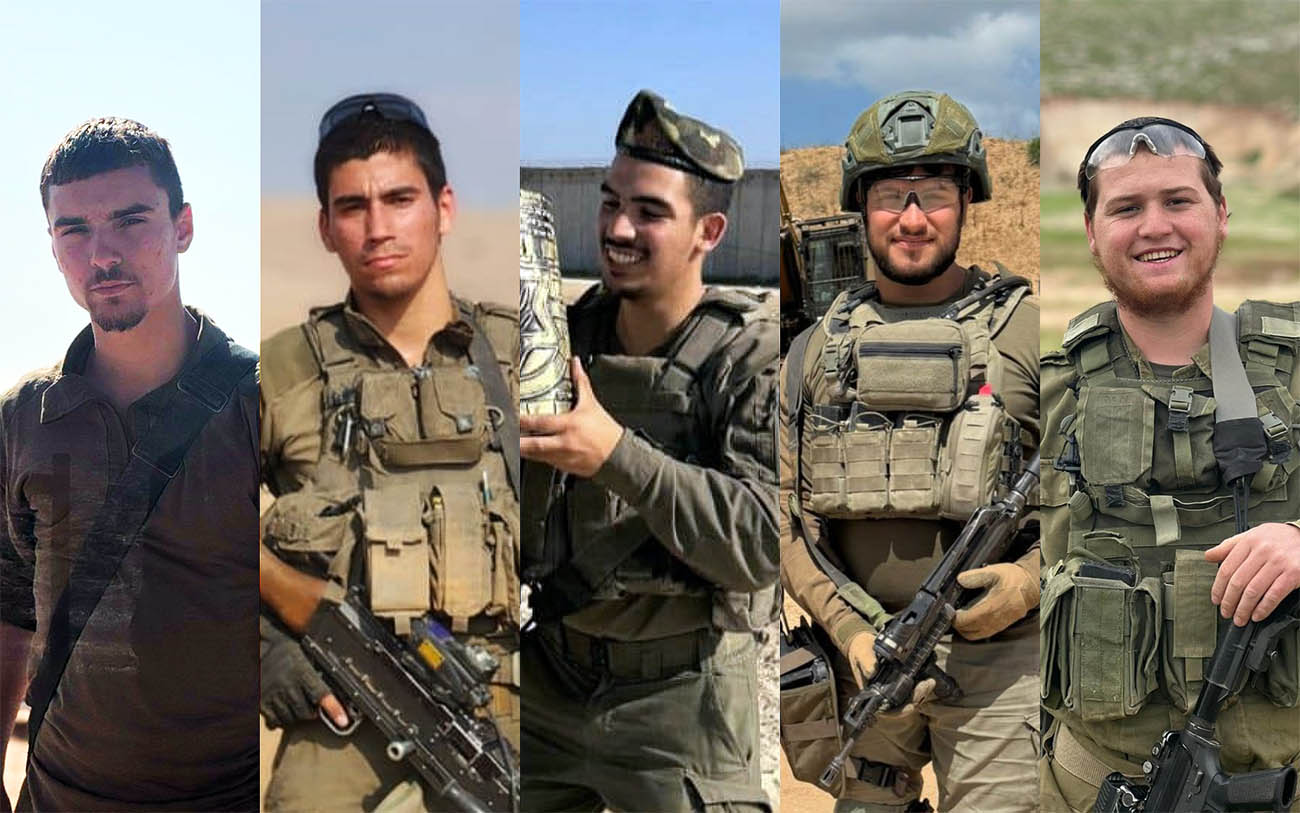
With five soldiers from the 97th Netzah Yehuda Battalion just ambushed and killed, one of the authors of “How Sri Lanka Rewrote the Rules of Modern Conflict” has offered insights on the war in Gaza and what Israel can do based upon the Sri Lankan Model.
Join our WhatsApp groupSubscribe to our Daily Roundup Email
This analysis examines the operational constraints currently limiting IDF effectiveness in Gaza and proposes strategic adjustments based on successful counter-insurgency models, particularly the Sri Lankan campaign against the LTTE (2006-2009). The focus is on achieving decisive military outcomes while managing information operations and diplomatic constraints.
Current Operational Environment
The IDF continues to sustain casualties in previously cleared sectors, with five killed in action and fourteen wounded in Beit Hanoun this week alone. This pattern reveals a fundamental flaw in current operational doctrine. Enemy forces retain operational capability in ostensibly “cleared” areas, supply lines to insurgent elements remain active, and the current clear-and-hold doctrine lacks the permanence necessary for lasting security.
The most critical vulnerability in current operations stems from the continuous flow of dual-use materials through humanitarian channels directly to enemy-controlled areas. This logistical pipeline enables the replenishment of enemy supplies and munitions, sustains insurgent presence in operational zones, and extends the timeline for conflict resolution indefinitely. Every truck of humanitarian aid that enters Gaza without proper control mechanisms effectively resupplies Hamas forces, prolonging the conflict and endangering Israeli soldiers.
Strategic Constraints Analysis
A significant command-and-control disconnect exists between political directives and military implementation. While government policy mandates cessation of aid to Hamas-controlled areas, military legal advisors continue to authorize humanitarian corridors. This disconnect creates operational vulnerabilities and extends conflict duration beyond any reasonable military timeline. The situation represents a failure of unified command that would be unacceptable in any other military context.
The current negotiation framework compounds these problems by involving intermediaries with documented ties to adversary forces. Qatar’s role as primary mediator creates compromised intelligence security, conflicting strategic objectives, and pressure for premature operational pauses that allow enemy forces to regroup and rearm. No military commander would accept such constraints in conventional warfare, yet they have become normalized in Gaza operations.
Lessons from the Sri Lankan Model
The Sri Lankan military’s successful 2009 campaign against the LTTE, is documented in “How Sri Lanka Rewrote the Rules of Modern Conflict.” Their approach provides crucial operational insights for the current Gaza situation. The Sri Lankan model demonstrated that controlling the information environment is as critical as controlling physical terrain in modern conflict.
Sri Lanka achieved information operations supremacy through complete restriction of independent media from operational zones. They maintained absolute narrative control by framing all operations as “humanitarian rescue” rather than combat operations, and implemented rapid response mechanisms to counter any external criticism before it could gain traction. This wasn’t merely public relations; it was a strategic military capability that created operational freedom.
The operational security achieved through isolation proved decisive. Sri Lankan forces implemented complete encirclement of enemy forces with no resupply permitted under any circumstances. They prevented real-time intelligence leakage from conflict zones through strict communications blackouts and neutralized diaspora influence through strategic partnerships with key regional powers. The lesson is clear: operational success requires absolute control of the battlespace, including the information domain.
Perhaps most critically, Sri Lanka maintained unity of command throughout their campaign. Military commanders retained direct control over all operational decisions without legal interference. Clear political backing for military objectives remained unwavering despite international pressure, and the government resisted all external pressure for operational pauses that would have allowed the LTTE to regroup.
Recommended Strategic Adjustments
The path forward for the IDF requires a three-phase approach that applies Sri Lankan lessons to the Gaza context. Each phase builds upon the previous one to create irreversible military facts on the ground.
Phase One focuses on operational preparation. The IDF must establish clear civilian-combatant separation through designated and enforced evacuation corridors for non-combatants. This requires creating verified civilian zones under military control with biometric registration for population management. No humanitarian consideration should override the military necessity of separating civilians from combatants.
Simultaneously, information operations infrastructure must be established with the same priority as kinetic operations. This includes a dedicated strategic communications unit with authority to act in real-time, pre-positioned counter-narratives for anticipated criticism, and controlled media access programs with carefully selected embedded journalists who understand operational security requirements.
Phase Two involves operational execution with dramatically increased tempo. Complete operational isolation must be enforced through total siege on remaining enemy positions. All supply routes, including humanitarian channels, must be eliminated without exception. This requires maintaining round-the-clock surveillance and interdiction capability that prevents any material from reaching enemy forces.
The acceleration of operational tempo prevents enemy adaptation. Simultaneous multi-axis operations prevent enemy regrouping while continuous pressure without operational pauses maintains initiative. Modern intelligence capabilities allow for exploitation of enemy communications for precision targeting, turning their coordination attempts into vulnerabilities.
Permanent area denial represents the key innovation from the Sri Lankan model. Systematic destruction of all infrastructure usable by enemy forces prevents future reconstitution of threats. Establishment of permanent military installations in cleared areas creates facts on the ground that diplomatic pressure cannot reverse. Implementation of long-term population control measures ensures that cleared areas remain clear.
Phase Three addresses post-conflict stabilization through strategic territory retention. Military control of all conquered areas must be maintained indefinitely, with civilian administration operating under military oversight. Reconstruction programs must incorporate security architecture from the ground up, ensuring that no future threat can emerge from these areas.
Population management, while controversial, proved essential to Sri Lankan success. Facilitating voluntary emigration programs for hostile populations reduces long-term security threats. Resettling friendly populations in strategic areas creates demographic buffers against infiltration. Economic incentives for cooperation can transform formerly hostile populations into security assets.
Information Operations Framework
The information operations framework must address three distinct audiences with tailored messaging. For the domestic audience, operations must emphasize force protection and hostage recovery while framing all actions as defensive and necessary. Operational security through controlled information release prevents enemy exploitation of public information.
The international audience requires different messaging emphasizing humanitarian efforts for civilian protection. Documentation of enemy use of human shields provides moral justification for military actions. Emphasis on sovereign rights and security imperatives resonates with states facing similar threats.
Regional actors represent a critical audience requiring coordinated messaging with allied nations. Exploiting regional rivalries prevents unified opposition while offering post-conflict economic opportunities creates incentives for support or at least neutrality.
Overcoming Current Constraints
Legal framework reform represents the most challenging but essential requirement. Military operational authority must supersede legal advisors in active combat zones. Wartime legal exceptions for humanitarian law application have precedent in other conflicts. Documenting legal precedents from successful campaigns provides justification for necessary measures.
Diplomatic realignment requires bypassing compromised intermediaries in negotiations. Direct pressure mechanisms on enemy sponsors prove more effective than mediated talks. Creating alternative diplomatic coalitions supporting military objectives provides international cover for necessary actions.
Operational tempo must increase dramatically to compress timelines before international intervention becomes effective. Creating facts on ground before diplomatic pressure accumulates maintains freedom of action. Continuous operations maintain initiative and prevent enemy recovery.
Metrics for Success
Success metrics must focus on military effectiveness rather than international approval. Zero resupply to enemy forces represents the primary metric. Permanent control of cleared territories demonstrates strategic success. Minimal friendly force casualties validate tactical approaches. Complete dismantling of enemy infrastructure ensures lasting security. Successful population management and control prevent future insurgency.
Conclusion
The current operational approach in Gaza suffers from critical constraints that extend conflict duration and increase friendly casualties unnecessarily. The Sri Lankan model demonstrates that decisive military victory against irregular forces requires complete information operations control, unified command authority, rejection of external operational constraints, and permanent territorial solutions.
Implementation of these principles, adapted to the specific operational environment of Gaza, offers a path to decisive military victory while managing international criticism. The key lesson from Sri Lanka remains clear: in modern conflict, controlling the narrative creates the operational space necessary for military success. When properly executed, information operations can neutralize international interference and enable the application of overwhelming military force to achieve strategic objectives.
The choice facing military planners is between a prolonged conflict with mounting casualties or a decisive campaign that establishes permanent security. Military history consistently demonstrates that half-measures in urban warfare only extend suffering for all parties involved. The Sri Lankan model, while generating international controversy, achieved its primary objective: complete military victory and permanent resolution of the territorial dispute.
Israel isn’t Sri Lanka, circumstances are different. How about the American model of destroying Nagasaki & Hiroshima to win ? Of course, it can’t be done. The world only wants Hamas to win and are obstructing an Israeli victory. 5th column Israeli left isn’t helpful either
שַׁבְתִּי וְרָאֹה תַחַת הַשֶּׁמֶשׁ כִּי לֹא לַקַּלִּים הַמֵּרוֹץ וְלֹא לַגִּבּוֹרִים הַמִּלְחָמָה וְגַם לֹא לַחֲכָמִים לֶחֶם וְגַם לֹא לַנְּבֹנִים עֹשֶׁר וְגַם לֹא לַיֹּדְעִים חֵן כִּי עֵת וָפֶגַע יִקְרֶה אֶת כֻּלָּם.
gaza is the Israeli Vietnam or Soviet Afghanistan, no plan just a bunch of incompetent generals.
Sounds like a defeat
Israel is smart but very stupid, at the same time.
Smart but NO COMMON SENSE.