
By Rabbi Daniel Schonbuch, LMFT (VINnews)
Join our WhatsApp groupSubscribe to our Daily Roundup Email
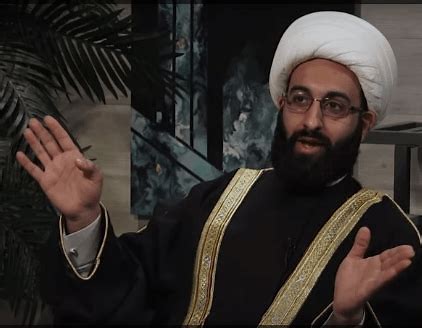
In the aftermath of the horrific Islamic extremist attack at Bondi Beach, one voice cut through the noise with moral clarity and courage: Imam Mohammad Tawhidi, widely known as the Imam of Peace. At a moment when fear, grief, and confusion dominated public discourse, Tawhidi issued an unambiguous condemnation of the violence—naming the ideology behind it and standing in solidarity with the victims.
Too often, acts of Islamist terror are met with silence, equivocation, or evasive language. Tawhidi refused that path. He spoke plainly, insisting that the attack was not an aberration but the predictable outcome of extremist interpretations that glorify violence against civilians. In doing so, he modeled what genuine moral leadership looks like in a crisis.
Calling Terror by Its Name
Imam Tawhidi did not hide behind platitudes. He made a critical distinction between peaceful Muslims and the Islamist ideology that distorts Islam into a political weapon. This distinction matters. When leaders refuse to name the problem, the problem metastasizes. Tawhidi’s message was clear: terrorism committed in the name of Islam must be confronted within Muslim communities—not excused, minimized, or blamed on abstract forces.
By calling out jihadist ideology directly, Tawhidi challenged both extremists and the culture of denial that enables them. His stance underscores a simple truth: peace is not achieved by silence, but by truth.
Solidarity With the Victims—and With Western Values
Equally powerful was Tawhidi’s solidarity with the victims and with Australia’s broader Judeo-Christian moral framework. He affirmed that Western societies—built on the sanctity of life, individual responsibility, and the rule of law—are worth defending. Terror attacks are not only assaults on individuals; they are attacks on the moral foundations of free societies.
In standing with the victims, Tawhidi reminded the public that compassion and justice transcend religious boundaries. His response offered a counter-narrative to the divisive rhetoric that often follows such attacks: unity grounded in shared values.
Why This Voice Matters Now
At a time when many public figures hedge their words out of fear or political pressure, Imam Tawhidi’s clarity is rare—and necessary. Condemnation without caveats matters. Leadership that prioritizes moral truth over social approval matters. His response to Bondi stands as a blueprint for how faith leaders can confront extremism without demonizing entire communities.
For Muslims seeking reform, for non-Muslims seeking honesty, and for societies seeking security without sacrificing conscience, Tawhidi’s voice is a reminder that peace is an active moral stance—not a slogan.
A Call for More Courage
The Bondi attack demands more than mourning; it demands moral courage. Imam Tawhidi has shown what that looks like. The question now is whether other leaders—religious, political, and cultural—will follow suit. Condemning terror clearly, confronting extremist ideology directly, and standing unapologetically for life and liberty are not optional. They are the minimum requirements of leadership in our time.
About Rabbi Daniel Schonbuch, LMFT
 Rabbi Daniel Schonbuch, LMFT, is a New York–based psychotherapist, author, and host of The Viktor Frankl Podcast, a rapidly growing platform exploring psychology, culture, faith, and current events through the lens of Viktor Frankl’s logotherapy. He is the author of five books, including Viktor Frankl and the Psychology of the Soul, and is the founder of the Torah Psychology School of Coaching and Counseling. His work focuses on helping individuals find meaning, build emotional resilience, and navigate complex social and political dynamics with clarity and compassion. You can follow him at rabbiforamerica.com.
By far most victims of Islamic terrorism have been Muslims, in Pakistan, Syria, Iraq, etc. Very sad for everyone.
This is very surprising. Why don’t we hear more from these kinds of muslims.