

By Rabbi Daniel Schonbuch, LMFT (VINnews)
Join our WhatsApp groupSubscribe to our Daily Roundup Email
In a sobering and urgent interview, Brigitte Gabriel delivered a warning that cuts through the noise of daily headlines: the Sydney shooting is not an isolated tragedy—it is a signal event. According to Gabriel, what happened in Sydney represents the early stages of a broader ideological and security crisis unfolding across the Western world.
Speaking with clarity and moral force, Gabriel framed the attack not merely as an act of violence, but as part of a larger pattern of ideological radicalization that is increasingly targeting Jewish communities and, more broadly, the foundations of Western society.
Not a Random Act—A Pattern Emerging
Gabriel emphasized that attacks like the Sydney shooting follow a familiar trajectory. First comes radicalization—often online, often unchecked. Then come warnings that are minimized or ignored. Finally, violence erupts, and only afterward do institutions scramble to explain what went wrong.
She cautioned against the reflex to label such attacks as “lone wolf” incidents or products of mental instability alone. While individual pathology can play a role, Gabriel argued that ideology matters—and when ideology is ignored, violence spreads.
“When societies refuse to name the ideology driving the violence, they guarantee more victims,” she warned.
The Jewish Community as the Canary in the Coal Mine
A central theme of the interview was Gabriel’s assertion that Jewish communities are often the first targets—but never the last. Historically, she noted, antisemitic violence precedes wider societal breakdowns. What begins with attacks on Jews eventually expands to journalists, political dissidents, religious minorities, and ordinary civilians.
Sydney, she argued, should be understood in this historical context. The targeting of Jews during a religious celebration is not coincidental; it is symbolic. It reflects an ideology that views Jewish life as illegitimate and Western pluralism as something to be destroyed rather than debated.
Failure of Moral Clarity
One of Gabriel’s sharpest critiques was reserved for political and cultural leaders who respond to such attacks with ambiguity. She expressed frustration with statements that condemn “violence in all forms” without identifying perpetrators, motives, or ideologies.
According to Gabriel, this lack of moral clarity creates a vacuum—one that extremists are eager to fill. When governments and institutions hesitate to confront radical ideologies out of fear of appearing intolerant, they inadvertently empower those who are anything but tolerant.
Media, Messaging, and the Radicalization Pipeline
Gabriel also addressed the role of media and social platforms in accelerating radicalization. She described a pipeline in which grievance-based narratives, antisemitic conspiracy theories, and calls for violence circulate freely, often disguised as “activism” or “resistance.”
In her view, the refusal to enforce consistent standards—where some forms of hate are condemned while others are excused—has normalized rhetoric that would have been unthinkable a generation ago.
What Comes Next if Nothing Changes
Perhaps the most chilling part of the interview was Gabriel’s forecast of what lies ahead if societies continue on their current path. She warned that Sydney will not be remembered as an anomaly, but as an early chapter in a much darker story—unless decisive action is taken.
That action, she stressed, must include:
-
Naming and confronting extremist ideologies directly
-
Protecting Jewish institutions and religious communities proactively
-
Enforcing laws without ideological double standards
-
Reasserting the moral confidence of Western democratic values
A Call to Wake Up—Before It’s Too Late
Brigitte Gabriel’s message was not one of despair, but of urgency. She believes the trajectory can still be altered—but only if leaders and citizens alike are willing to face uncomfortable truths.
The Sydney shooting, she argued, is a warning flare. Whether it becomes a turning point or merely a precursor depends on what happens next.
As Gabriel made clear throughout the interview: history does not repeat itself by accident. It repeats when societies choose denial over courage.
Watch the full interview for a deeper, unfiltered discussion—and decide for yourself whether the warning is being taken seriously enough.
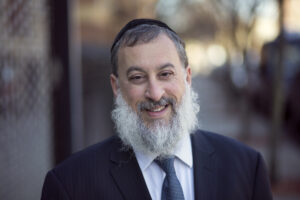 Rabbi Daniel Schonbuch, LMFT, is a New York–based psychotherapist, author, and host of The Viktor Frankl Podcast, a rapidly growing platform exploring psychology, culture, faith, and current events through the lens of Viktor Frankl’s logotherapy. He is the author of five books, including Viktor Frankl and the Psychology of the Soul, and is the founder of the Torah Psychology School of Coaching and Counseling. His work focuses on helping individuals find meaning, build emotional resilience, and navigate complex social and political dynamics with clarity and compassion. You can follow him at rabbiforamerica.com.
Here’s more news about radical Islamist attacks. Last Saturday, 3 Americans were killed and 3 wounded by an ISIS terrorist attack in Syria. The day before, Germany foiled a radical Islamist attack on a Christmas Market in Bavaria. Following the Bondi Beach attack, Polish authorities foiled an ISIS-inspired plot to attack a Christmas market in Lublin. Citing a “very high terror threat,” Paris cancelled New Year’s Eve celebrations on the Champs-Elysees. In the USA, the FBI arrested 5 for a pro-Palestinian plot to bomb Los Angeles and New Orleans on New Year’s Eve!”
So yes, the world—especially the Jewish world—is trembling! And rightly so. What’s happening is so disturbing. We must remain vigilant. But as vigilant as we can be, we must never forget—to paraphrase the classical Medieval work Chovot HaL’vavot — “Darkness is a coward. Shine a little light and it runs away.”
This radicalism started in the movements of peace, climate control, and consumer protection. Thank the losers of those movements for these murders.